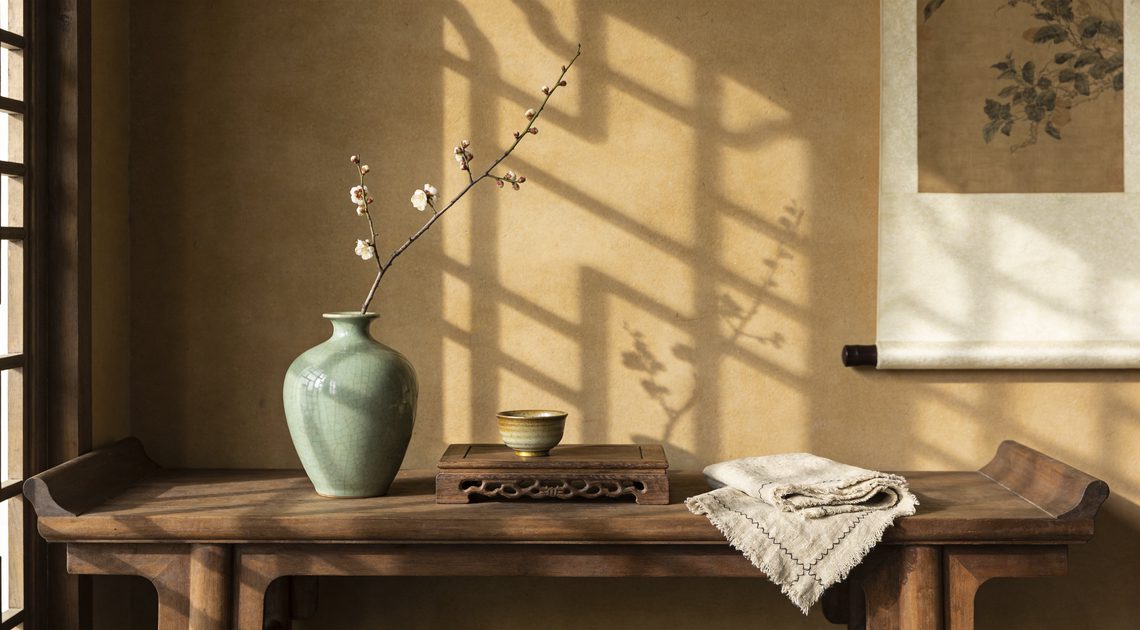
There is a particular kind of home that stays with you. It is not the most expensive one. It is not the one with the trendiest furniture or the boldest color palette. It is the one where every object feels like it was chosen, not just acquired — where the things in the room seem to have arrived slowly, deliberately, each with a story the owner could tell you if you asked.
This is the quiet promise of Eastern-inspired decor done well. Not a room that looks like a themed restaurant. Not a hastily assembled collection of "Asian-style" objects from a big-box store. But a space where objects from Eastern traditions — a celadon vase, a silk wall hanging, a hand-carved wooden tray — sit comfortably alongside the rest of your life, bringing depth rather than decoration.
How do you get there? It begins before you buy anything at all.
Start With Meaning, Not a Shopping List
The first mistake in mindful decorating is starting with a list of things to acquire. A shoji screen. A Buddha head. A set of matching lotus-print cushions. The logic is: if I buy the right objects, the room will feel right.
It will not. Because objects chosen only for how they look have a short emotional half-life. They arrive. They look vaguely correct. And then, over time, they become invisible — just more stuff taking up space.
Instead, begin with a feeling. Ask yourself: what quality do I want this room to hold? Calm. Stillness. Warmth. Contemplation. Write it down. Let it guide you. The objects you bring in should serve that feeling, not just fill a blank wall or an empty corner.
A single meaningful home decor piece — one that carries a story or a connection to a tradition — will do more for a room than five generic items bought in one afternoon. This is the essence of choosing with intention.
Know What You Are Bringing In
Part of honoring Eastern-inspired decor is understanding what you are looking at. Not in an academic, museum-label way. But enough to know why an object exists, where it comes from, and what it represents.
A Kwan Yin statue, for example, is not a generic "Asian goddess figurine." She is the bodhisattva of compassion, venerated across centuries of Buddhist tradition. To place her in your home without knowing this is to miss the point — and to risk reducing something sacred to mere decoration.
A Chinese silk flower arrangement is not just a pretty alternative to fresh blooms. It is the product of a craft tradition stretching back to the Tang Dynasty, each petal shaped by hand with tools and techniques passed through generations. Knowing this changes how you see the object. It also changes how you treat it.
This does not mean you need a degree in art history. It means you pause before purchasing. You ask: what is this? who made it? what does it mean? The answers will either deepen your connection to the object or tell you it is not the right one. Either outcome is valuable.
Choose Craftsmanship Over Convenience
There is a difference between something made by hand and something made by a mold. You can feel it. The Asian decor pieces that endure in your home — the ones you still notice years later — are almost always the ones shaped by human hands rather than machines.
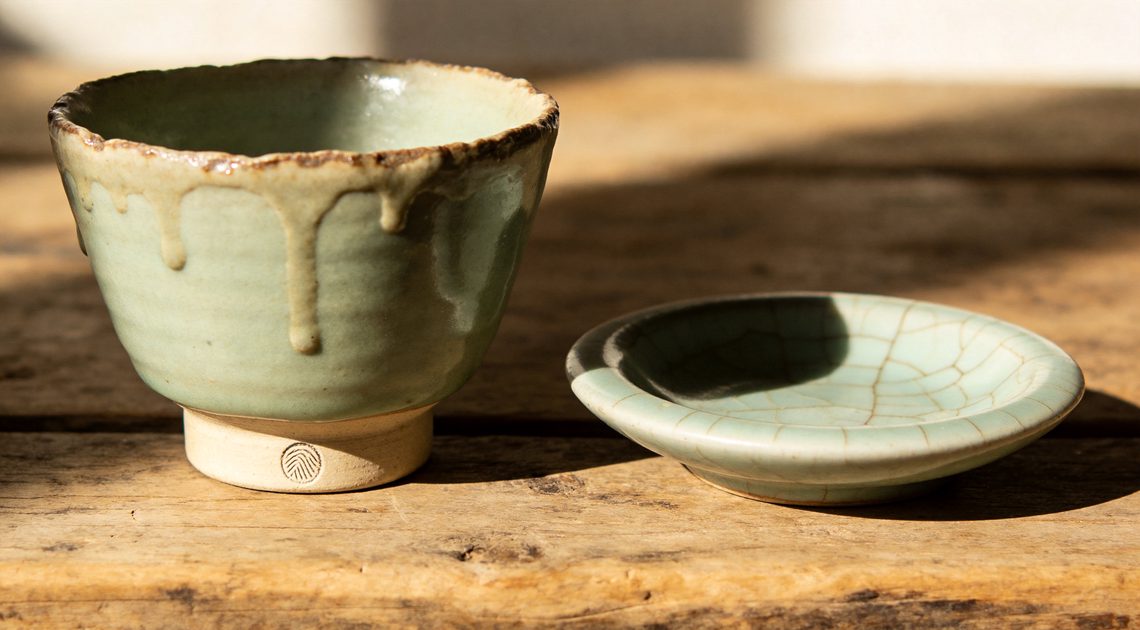
Look for evidence of the maker. An uneven glaze on a ceramic bowl. Tool marks on a carved wooden tray. The slight asymmetry of a hand-stitched textile. These are not flaws. They are signatures. They tell you that someone, somewhere, spent time on this object. When you bring it into your home, that time comes with it.
Handmade objects also age differently. Machine-made items tend to degrade — they look worse with wear. Handmade items tend to develop patina — they look better. A handmade celadon cup will grow more beautiful as tiny cracks in the glaze absorb tea over years of use. A mass-produced mug will simply chip.
Choosing meaningful home decor often means choosing fewer things overall, but each one made with care. Quality over quantity is not a budget constraint. It is an aesthetic principle.
Let Objects Breathe
A common mistake when bringing Eastern-inspired decor into a Western home is overcrowding. The instinct is to fill the space the way one might fill a shelf of collectibles — grouping objects together so none of them gets the attention they deserve.
Eastern aesthetic traditions teach something different. In a Japanese tokonoma alcove, a single scroll hangs above a single flower arrangement. Nothing competes. Nothing distracts. Each object is given the gift of space.
Apply this principle at home. One ceramic vase on a side table, not five. One wall hanging on a wall, not a cluster. One meaningful object on a shelf, surrounded by enough emptiness that the eye can rest on it fully. The room will feel calmer — and each piece will feel more significant.
This is also where mindful decorating meets practicality. When you commit to fewer objects, you can afford to choose better ones. The budget that might have bought ten forgettable items now buys one or two that you will love for years.
Patience Is Part of the Practice
A meaningful home is not furnished in a weekend. It accumulates, slowly, over time. The ceramic cup from a trip. The silk wall hanging discovered in a small shop. The wooden tray found at a market and carried home in a suitcase, wrapped in newspaper. These objects arrive in their own time, and that is part of their value.
Allow yourself to live with empty spaces for a while. Wait for the right object rather than filling the void with something close enough. The discipline of patience is, itself, a form of mindful decorating. The room grows with you, rather than being imposed upon you by a catalog or a trend cycle.
What You Surround Yourself With Matters
The objects in your home are not neutral. They shape your attention. They affect your mood. A room filled with things chosen hastily feels different from a room filled with things chosen carefully. You can feel it when you walk in.
Eastern-inspired decor chosen with intention brings something rare into a home: a sense that this space is yours, but also connected to something larger — a tradition, a craft lineage, a way of seeing beauty that has lasted centuries.
That is worth taking time over.
No letters yet — be the first to write.