There is a quiet presence that has watched over Asian homes for centuries—a figure of boundless mercy and grace. The Kwan Yin Bodhisattva, known also as Guanyin or the Goddess of Mercy, embodies compassion itself. In Mahayana Buddhism, she is the bodhisattva who hears the cries of the world and postpones her own enlightenment to help all beings find liberation. For those drawn to mindful living, placing a Kwan Yin statue in a home is more than decoration; it is an invitation to slow down, soften the heart, and remember what matters most.
Her image varies across traditions. In Chinese art, she often appears as a serene woman in flowing white robes, holding a vase of pure water or a willow branch. She may stand on a lotus or ride a dragon. In Japan, she is Kannon, and her features are gentler still—sometimes with a thousand arms to reach every suffering being. Despite these different forms, the message remains constant: you are not alone, and there is always a way back to peace. That is the promise of the Kwan Yin Bodhisattva.
What makes her so powerful for the modern home? We live in an age of speed and noise. Our minds are pulled in a dozen directions. A Kwan Yin figure—whether carved from wood, cast in bronze, or painted on silk—offers a visual anchor. When you pause by her, even for a breath, you reconnect with a quieter part of yourself. She is a reminder that compassion begins at home, with the way we treat ourselves and those we live with.

The Origins of the Kwan Yin Bodhisattva
The story of Kwan Yin begins in India as Avalokiteshvara, the bodhisattva of compassion. As Buddhism traveled the Silk Road to China, this male figure gradually transformed. By the Tang dynasty, Avalokiteshvara had taken on feminine attributes in Chinese folk devotion. The name Kwan Yin (Guanyin) means "the one who perceives the sounds of the world"—specifically, the cries of those who suffer. She is not a distant deity but an ever-present listener. In Chinese households, she has been the protector of women, children, sailors, and anyone in distress. Over centuries, local legends added layers: she could appear as a fisherman, a beggar, or a beautiful lady to test people's kindness. The essence of the Kwan Yin Bodhisattva is approachable, intimate, and deeply human.
Today, her image crosses cultural boundaries. I have seen her in a sleek New York apartment, a California yoga studio, and a traditional Kyoto temple. Each setting gave her a different energy, but the feeling was the same: grounded, safe, and quietly powerful. That is the mark of a true bodhisattva—she adapts to the needs of the devotee while staying true to her vow.
Bringing Her Energy Into Your Space
Choosing a Kwan Yin representation for your home is a personal act. Some people prefer a traditional porcelain statue with a lotus flower; others are drawn to a minimalist line drawing on a scroll. The material matters less than the intention. Place her where you will see her every day—on a shelf, a mantel, or a small altar. Near your meditation cushion is especially meaningful. Light a candle or offer fresh flowers as a simple ritual. You are not worshiping a statue; you are honoring the quality of compassion she represents.
I keep a small wooden Kwan Yin on my desk. She is about six inches tall, worn smooth from years of handling. Sometimes, when I am frustrated with a project, I just look at her half-closed eyes and the slight smile on her lips. It’s enough to shift my breathing. That is the quiet work of the Kwan Yin Bodhisattva—she doesn't solve problems, she changes how we hold them.
A Note on Respect
If you are not Buddhist, you may wonder if it is appropriate to display her image. The answer is simple: as long as you approach her with sincerity and respect, she welcomes all. The Kwan Yin Bodhisattva is not an exotic decoration. She is a living symbol of compassion that transcends religion. Learn her story. Treat her image with care. That is the right way to honor her.
The Symbolism Behind Her Attributes
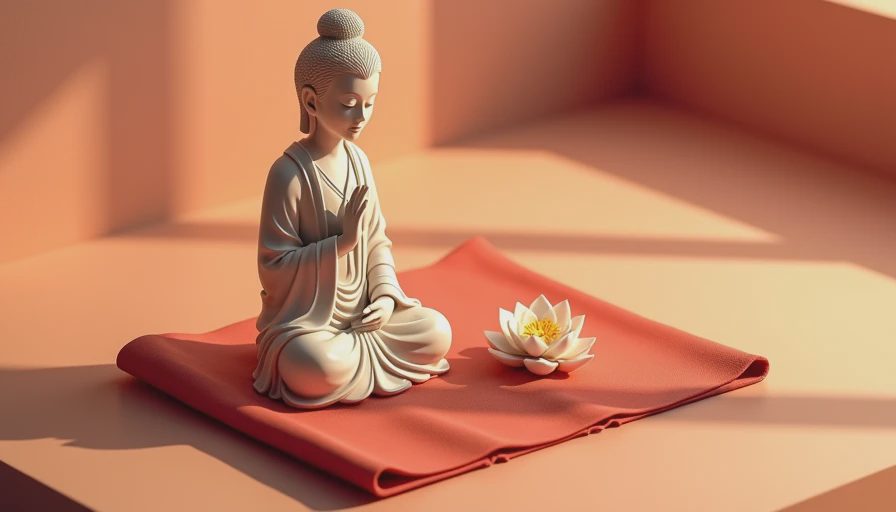
Every detail of a Kwan Yin statue carries meaning. The vase holds the dew of compassion, cooling the fires of suffering. The willow branch is flexible yet strong—a reminder to bend with life rather than break. The lotus beneath her feet represents purity rising from muddy waters. Contemplating these symbols deepens your connection. For example, when you see her with a child, she is known as the Child-Giving Guanyin, a protector of families. If her eyes are closed, she is turning inward to hear the world more clearly. These are not random artistic choices but a visual language developed over centuries. Understanding them enriches your appreciation of the Kwan Yin Bodhisattva.
Placing Her at the Heart of Mindful Decor
Incorporating a Kwan Yin figure into your home should feel natural, not forced. She pairs well with natural materials: wood, stone, linen. Avoid clutter around her. Let her have space to breathe. A single figurine on a windowsill catching morning light can transform a room. If you have multiple spiritual objects, group them harmoniously. A Buddha statue, a meditation bell, and a Kwan Yin can share a shelf without conflict—each supports the same inner work. The key is to let your home tell a story of intention. Every piece, including the Kwan Yin Bodhisattva, should feel chosen, not accumulated.
Recommended Pieces for Your Home
There are wonderful artisans who craft Kwan Yin figures with deep respect for tradition. Look for hand-carved wood from Indonesia or Vietnam, or porcelain from Jingdezhen in China. A small bronze statue develops a beautiful patina over time. For a subtle touch, choose a simple print or a calligraphy piece with her name. Avoid mass-produced resin versions that feel hollow. The best ones carry the energy of the carver's hand. If you cannot travel, many reputable online shops work directly with artisans. When you find the right one, you will know—she will feel like an old friend you haven't met yet.
Final Reflection
The Kwan Yin Bodhisattva is not about perfection. She is about presence. She teaches that compassion begins with a single moment of attention. In a fast world, she is a permission slip to slow down. Whether you place her in a meditation corner or a living room shelf, let her remind you of your own capacity for kindness. That is the gift she offers: not a quick fix, but a lifelong companion on the path to a gentler life.


No letters yet — be the first to write.