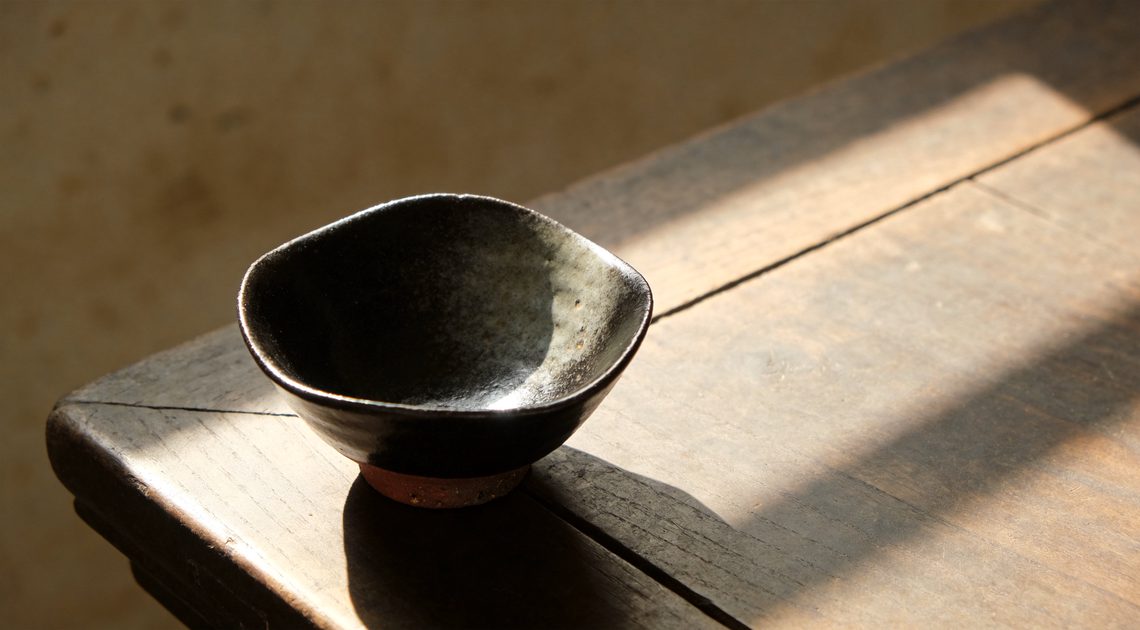
Hold a mass-produced mug in your hands. It is probably smooth. Symmetrical. Evenly glazed. It does exactly what it was designed to do, and it feels like nothing. Now imagine holding a Japanese tea ceramic — a bowl made for the tea ceremony, shaped by hand, fired in a wood-burning kiln. The rim is slightly uneven. The glaze pooled thicker in one spot, thinner in another. The foot is rough and unglazed, revealing the dark clay beneath. As you turn the bowl in your hands, it asks to be felt, not just used.
This is not a design flaw. It is the entire point.
Japanese tea ceramics are among the most revered pottery traditions in the world — not despite their imperfections, but because of them. Understanding why requires stepping into the world of the tea ceremony, where every object is chosen not for how it looks on a shelf but for how it feels in the hands, how it meets the lips, and how it holds the fleeting moment of a shared bowl of tea.
The Tea Ceremony and the Birth of a Pottery Tradition
The Japanese tea ceremony, or chanoyu, is not a casual event. It is a choreographed ritual of presence — every gesture considered, every object selected with care. The tea bowl, or chawan, is the most intimate object in the room. It is held, turned, admired, and drunk from. It passes from host to guest, carrying not just matcha but a quiet acknowledgment of shared time.
This context shaped the evolution of tea ceremony bowls in Japan. Unlike Chinese ceramics of the same period — prized for their symmetry, evenness, and flawless glazes — Japanese tea bowls developed in an entirely different aesthetic direction. They became rougher. More irregular. More human.
The shift is often credited to the 16th-century tea master Sen no Rikyū, who rejected the ornate perfection of imported Chinese wares in favor of humble, rustic bowls made by Japanese potters. Rikyū's ideal was wabi — a beauty found in simplicity, austerity, and the unpretentious. The bowls that embodied this ideal were not beautiful in any conventional sense. They were lopsided, pitted, and glazed in muted earth tones. But in the context of the tea ceremony, they came alive.
Raku: The Most Celebrated of Tea Ceramics
No discussion of Japanese tea ceramics is complete without raku pottery. The word raku means "enjoyment" or "ease," and the tradition began in Kyoto in the late 16th century when a potter named Chōjirō began making tea bowls specifically for Rikyū's ceremonies.
Raku bowls are not thrown on a wheel. They are shaped by hand — each one formed slowly, deliberately, with the potter's fingers leaving subtle indentations in the clay. After a low-temperature firing, the bowl is removed from the kiln while still glowing hot and placed into a container of combustible material — sawdust, leaves, or straw. The intense heat ignites the material, and the resulting smoke interacts with the glaze in unpredictable ways. No two raku tea bowls are ever the same. The fire decides as much as the potter does.
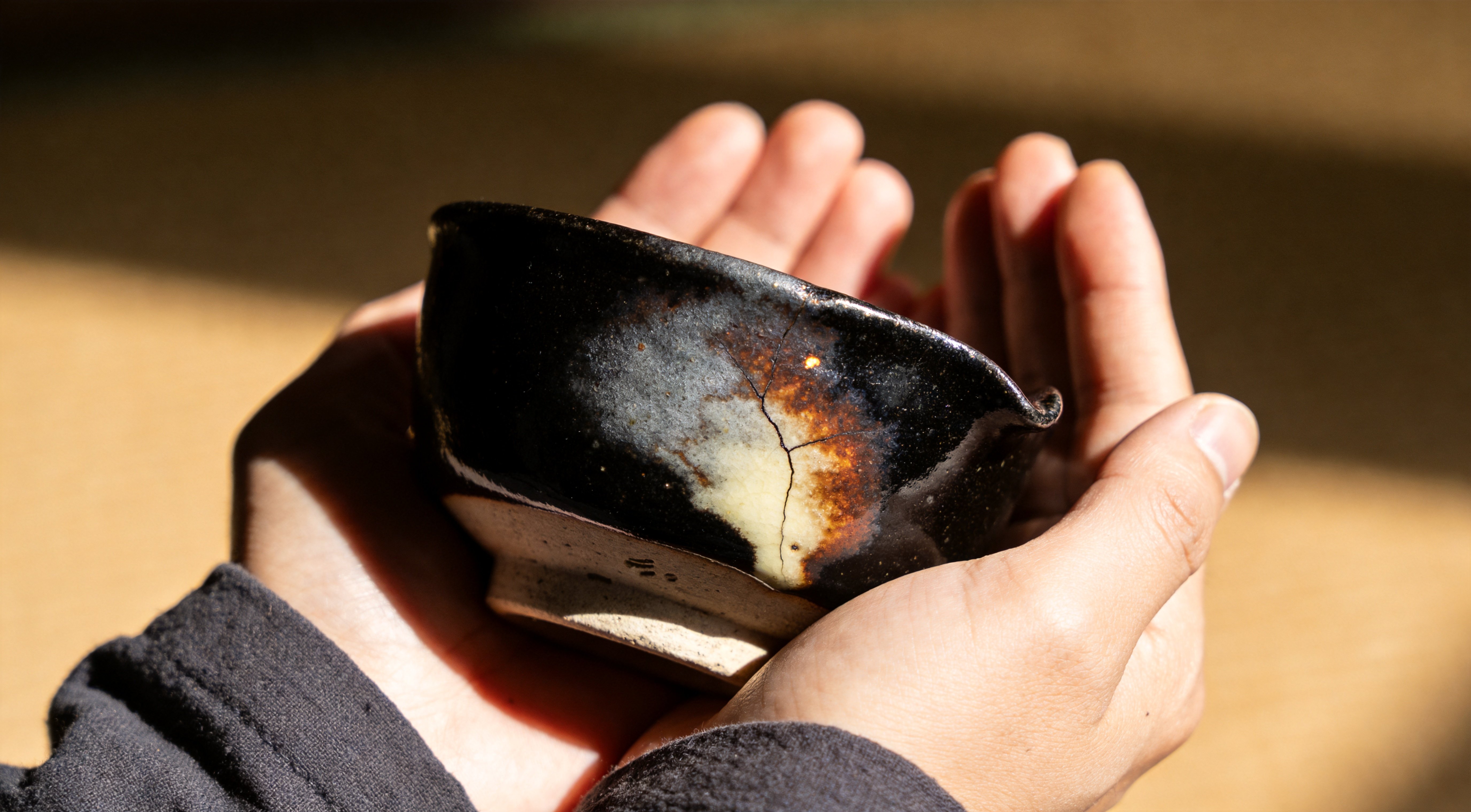
The result is a bowl that fits perfectly in the palms — often slightly asymmetrical, with a softness and warmth that wheel-thrown pottery rarely achieves. A raku bowl does not demand admiration. It invites holding. It feels complete not because it is flawless, but because it is fully itself.
The Beauty of the Uneven Rim
One of the defining features of handmade tea bowls for the tea ceremony is the intentionally uneven rim. In Western pottery, a warped rim is a defect. In Japanese tea ceramics, it is a feature — known as kuchizukuri, the "making of the mouth."
The uneven rim serves a purpose. When the bowl is raised to the lips, the slight dip or curve guides the drinker's mouth to a specific spot. The bowl is turned in the hands before drinking so that the most beautiful side faces the guest — and the most functional side meets the lips. This small interaction, unnoticed by an outsider, is part of the quiet choreography of the tea ceremony.
The uneven rim also reminds the drinker that the bowl was made by human hands, not a machine. The potter's decisions are visible. The slight wobble in the clay, the place where the glaze broke over the edge, the asymmetry that makes the bowl feel alive rather than inert. To hold such a bowl is to hold the presence of its maker.
Living With Japanese Tea Ceramics
You do not need to practice the tea ceremony to appreciate Japanese tea ceramics. A single tea ceremony bowl on a shelf or a side table carries the same quiet presence it holds in the tea room. It does not need to be used to be felt — though using it deepens the connection.
Imagine starting your morning not with a mass-produced mug but with a handmade tea bowl — one that warms differently in your hands, that asks to be turned and noticed, that makes the act of drinking tea feel less like a caffeine delivery system and more like a small ritual of attention.
This is the gift of Japanese tea ceramics. They do not shout. They do not demand. They simply wait — rough, uneven, deeply human — for someone to pick them up and remember what it feels like to hold something made with care.
No letters yet — be the first to write.