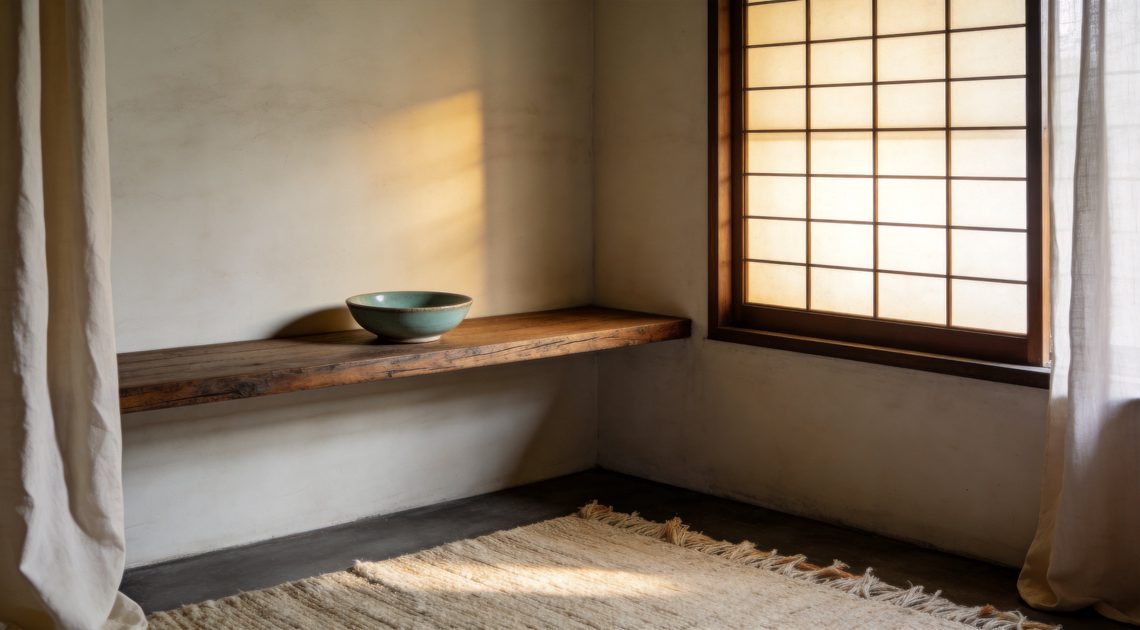
There is a particular kind of room that feels different the moment you enter. It is not the furniture that makes the impression. It is not the color of the walls or the arrangement of objects on a shelf. It is something more fundamental — something you sense before you can name it. The light is soft and layered. The surfaces invite touch. The space itself seems to breathe.
These rooms are not designed in the conventional sense. They are composed — like a piece of music, like a brush painting — using three elements that most Western decorating advice barely mentions. Light. Texture. Space.
In Eastern-inspired interiors, these are not afterthoughts. They are the foundation. Objects come later, if they come at all. The room is built first from what cannot be touched — light that moves, air that circulates, emptiness that holds. Understanding this is the difference between a room that looks calm and a room that actually feels calm.
Light as a Material, Not an Afterthought
In most Western homes, light is treated as a utility. Overhead fixtures are installed to eliminate darkness. Lamps are chosen for their appearance rather than the quality of their glow. The goal is brightness — even, consistent, shadowless.
Eastern-inspired interiors treat light differently. Light is not a tool. It is a material, as essential as wood or clay. And like any material, it can be shaped, layered, and allowed to change.
Natural light is the starting point. In a traditional Japanese home, shoji screens do not block daylight — they filter it. The paper diffuses the sun into a soft, even glow that changes in intensity and angle as the hours pass. The room is not the same room at noon that it was at dawn. This impermanence is not a flaw. It is the point. The moving light reminds you, quietly, that nothing stays.
Artificial light follows the same principle. Instead of a single overhead source, a mindful interior design approach layers low, warm points of light: a floor lamp with a fabric shade in one corner, a rice paper lantern near a reading chair, a single candle on a side table. These sources cast overlapping shadows. They create depth. They make the room feel held rather than exposed.
The rule is simple: never a bare bulb. Never a cold white LED as the only source. Light should arrive gently, the way it does in nature — filtered through leaves, reflected off water, softened by clouds.
Texture Is What Warmth Feels Like
A room can be perfectly lit and still feel cold if every surface is hard, smooth, and synthetic. Texture is what makes stillness feel warm rather than sterile. It is the element that invites you to stay.
In calm home atmosphere design, texture begins underfoot. A hand-woven wool rug rather than a synthetic one. Tatami mats rather than laminate flooring. The feet are the first part of the body to register a room's welcome. A floor that feels good to walk on changes everything above it.
Texture continues upward. Linen curtains that ripple slightly in the air. A wooden table with visible grain and a slightly worn edge. Ceramic vessels with uneven glazes — matte in one spot, glossy in another, rough at the unglazed foot. A wool throw draped across a sofa, not folded into a crisp angle but left soft and reachable.
These materials — wool, linen, wood, clay, stone — share a common quality: they age well. A linen cushion at year three is softer and more beautiful than it was on day one. A wooden surface grows richer as it absorbs light and oils from hands. A glazed ceramic bowl develops a fine network of crackles over years of use. This is the opposite of planned obsolescence. Interior texture and light work together — light reveals the depth of a rough surface, and texture gives light something to play against.
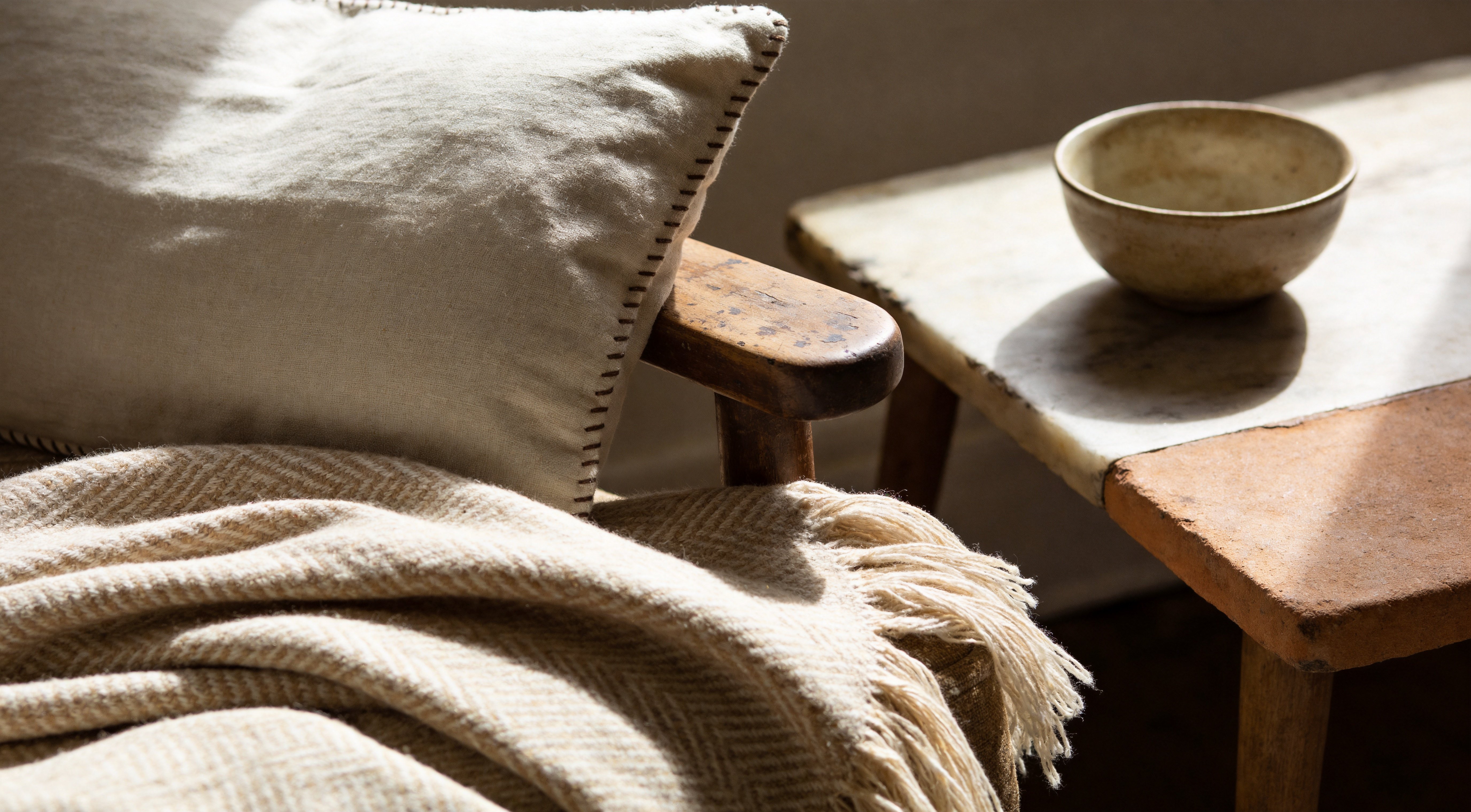
A room without texture is a room you look at. A room with texture is a room you feel. The difference is immediate and bodily.
Space That Holds Rather Than Empties
The Western instinct is to fill space. An empty corner is a problem waiting to be solved. A bare wall is an opportunity for another piece of art. A clear surface is a vacancy sign.
Eastern-inspired interiors treat space differently. In the Japanese concept of ma, emptiness is not a lack. It is a presence. The pause between objects is not wasted. It is where the eye rests. It is where the room breathes.
This is the most countercultural element of mindful interior design — the willingness to leave surfaces bare, walls unadorned, corners open. A shelf with a single object on it, surrounded by generous empty space. A room where furniture is pulled away from walls, allowing air and light to circulate fully around each piece. A floor that is mostly open, not crowded with side tables and ottomans and decorative baskets.
When space is treated as an element rather than a void, the objects that do occupy the room become more significant. A single celadon vase on an otherwise bare console table holds more weight than the same vase crowded among five other things. The emptiness amplifies the object. The silence amplifies the note.
Bringing the Three Together
Light, texture, and space are not separate categories. They interact. Soft light falling across a textured wall creates shadows that become part of the room's atmosphere. Empty space around a rough ceramic bowl allows light to reach it from multiple angles, revealing the depth of its glaze. A linen curtain filters daylight and adds its own texture to the air.
When these three elements are in balance, the room does not need much else. A few meaningful objects. A place to sit. A surface for a cup of tea. The rest is light, texture, and space — doing their quiet work.
This is the foundation of Eastern-inspired interiors. Not a style to replicate, but a way of paying attention. Start with light. Add texture. Protect space. The objects will find their way in time.
No letters yet — be the first to write.