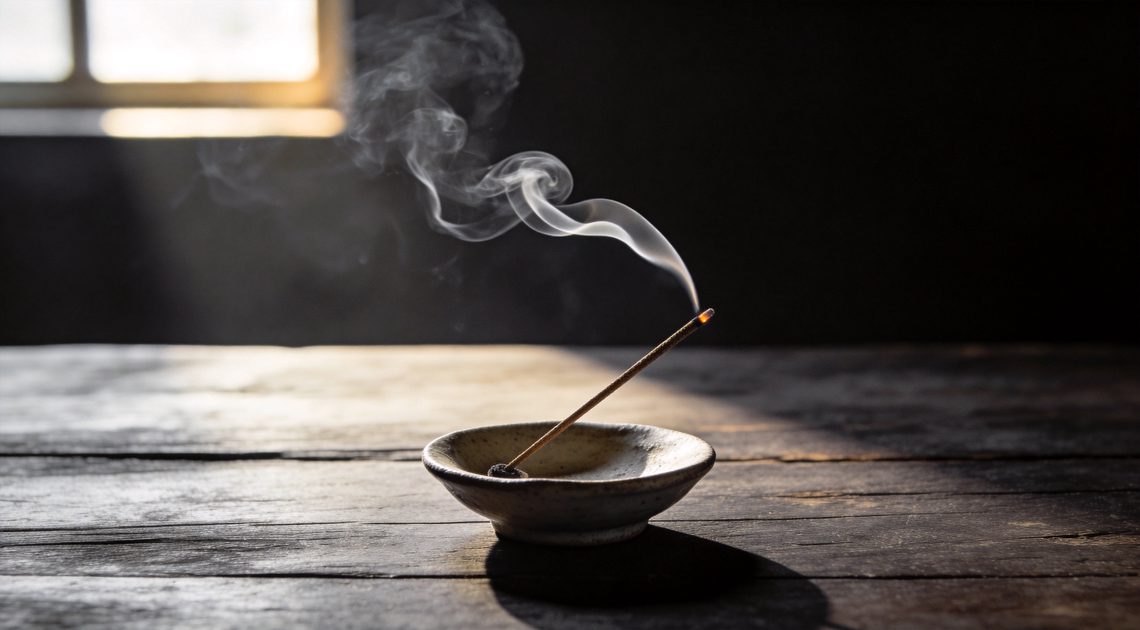
There is a particular kind of silence in a room where incense has just been lit. Not the silence of absence, but the silence of attention. The thin ribbon of smoke rises, wanders, dissolves. The scent arrives before you can name it — sandalwood, perhaps, or something deeper, earthier, older. For a moment, the room is different. You are different.
Handmade incense has been shaping space this way for millennia. Long before fragrance became an industry — before synthetic perfumes and plug-in diffusers and aerosol sprays — there were hands grinding bark and resin, blending recipes passed through generations, pressing dough-like paste into spirals and slender sticks. This is not a lost art, though it is a quiet one. It persists, in small workshops and family-run studios, tended by people who believe that scent is not merely a background experience but a form of presence.
A Tradition That Traveled Through Time
The origins of traditional incense craft stretch back to ancient China, India, and Egypt — cultures that burned aromatic woods and resins as offerings to deities, as medicine, and as a bridge between the material and the sacred. By the time incense reached Japan in the 6th century, it had already accumulated centuries of spiritual and medicinal meaning.
But it was in Japan that Japanese incense became something distinct — an art form in its own right. While other cultures continued to emphasize the spiritual and medicinal uses of incense, Japanese artisans began to refine the craft of incense-making itself. The blending of fragrant materials became a pursuit of beauty and subtlety, not unlike the blending of tea or the arrangement of flowers.
During the Edo period, the practice of kōdō — the "Way of Fragrance" — emerged as one of Japan's three classical arts of refinement, alongside the tea ceremony and flower arrangement. In kōdō, participants do not simply burn incense. They listen to it. The verb is intentional. One "listens" to incense the way one listens to music, attending to the way the fragrance unfolds over time — the initial note, the deeper middle, the lingering finish.
How Handmade Incense Is Made
The process of making handmade incense begins with raw materials that have been used for centuries. Sandalwood from Mysore. Aloeswood from Southeast Asia, formed when certain trees produce a dark, fragrant resin in response to injury or infection — a process that can take decades. Cassia bark. Clove. Star anise. Spikenard. Frankincense.
These materials are ground — not in industrial mills, but slowly, often by hand or with stone mortars, to preserve the integrity of their scent. The powders are then blended according to recipes that may have been guarded by a single family for generations. Water and a natural binding agent, traditionally the bark of the tabunoki tree, are added to form a dough-like paste. This paste is then extruded or hand-rolled into slender sticks, cut to precise lengths, and laid out to dry slowly — not in ovens, but in air, over days or weeks.
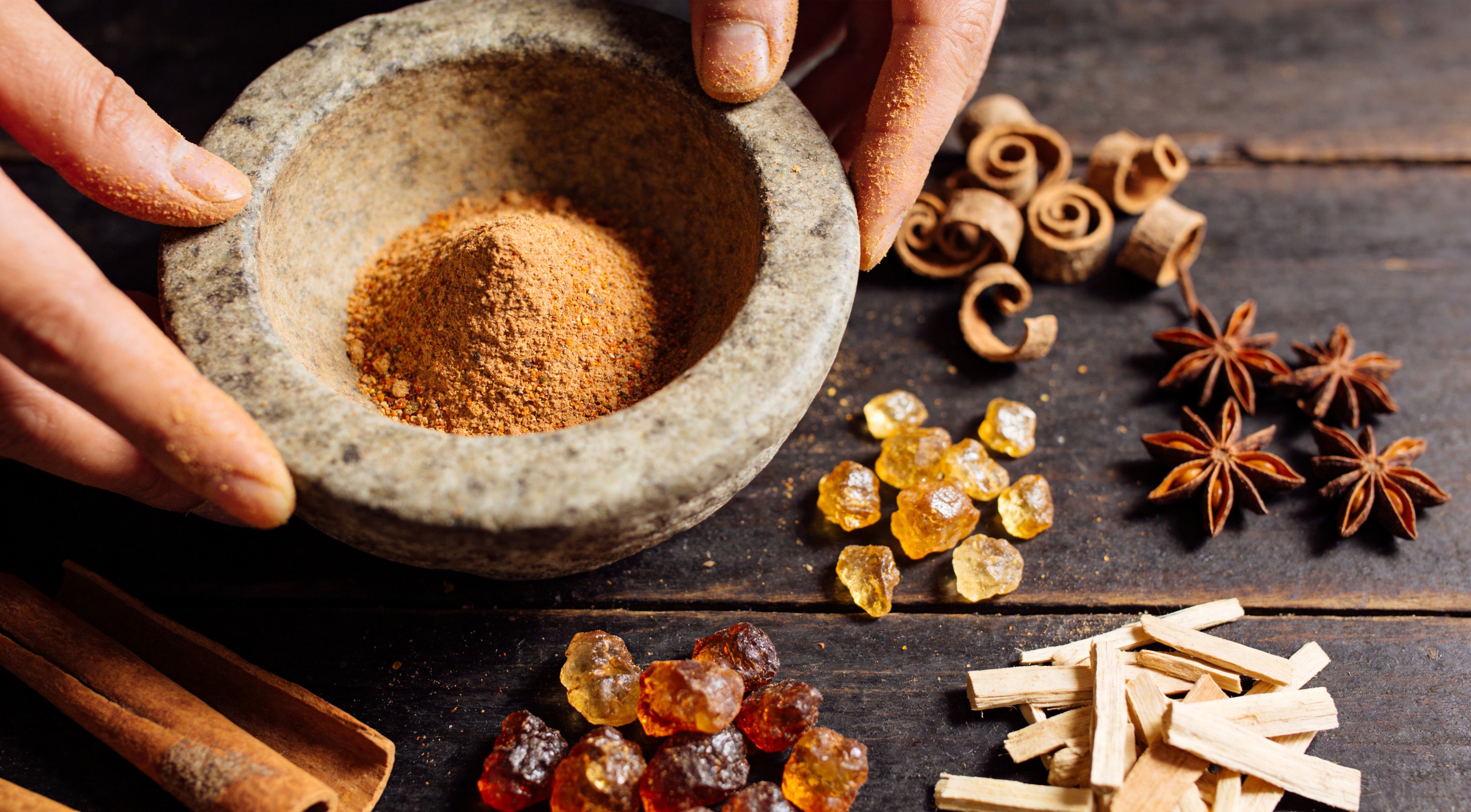
Every step matters. The ratio of wood to resin to spice. The fineness of the grind. The humidity of the drying room. A single variation can shift the fragrance from transcendent to ordinary. The maker's skill lies not just in following a recipe, but in knowing — through years of experience — how to adjust for the particular batch of materials in front of them.
The result is a stick of traditional incense craft that burns evenly, releasing its fragrance not in a single burst but in a slow, unfolding narrative. This is incense meant to be listened to.
The Ritual of Burning Incense
There is a difference between burning incense and lighting a scented candle. A candle is often lit and forgotten — a passive background presence. Incense ritual is active. It begins with a moment of intention.
In a traditional Japanese context, the charcoal is buried in ash, shaped into a precise cone. A small square of mica is placed on top. The incense — often a kneaded ball or a chip of fragrant wood — rests on the mica, warmed rather than burned. No flame. No smoke. Just heat, releasing the fragrance slowly, sometimes over hours. The participants take turns lifting the incense to their faces, cupping the fragrance, breathing it in. They do not discuss the scent. They simply sit with it.
Even in a less formal context — lighting a single stick of handmade incense at home — the ritual holds. You strike the match. You touch the flame to the tip. You watch the tiny ember catch, then blow it out, leaving the stick to smolder and release its first thread of smoke. For that moment, you are not doing anything else. You are paying attention.
Why Handmade Incense Matters Now
We live in a time of synthetic everything. Most commercial incense is made with artificial fragrances, petroleum-based binders, and chemical accelerants — cheap to produce, harsh to inhale, and utterly lacking in subtlety. They burn fast and smell loud, and they leave behind a chemical residue in the air and in the lungs.
Handmade incense, made from pure plant materials, offers something different. Not just a cleaner burn, but a different relationship to scent itself. Natural fragrances unfold slowly. They change in the air. They interact with the body's own chemistry. The same stick of sandalwood incense can smell different in the morning than it does in the evening, different in a dry room than in a humid one. It is alive in a way synthetic fragrance can never be.
There is also, as with any handmade object, the presence of the maker. When you light a stick of traditional incense craft, you are lighting the work of someone who may have spent decades learning their art. The stick carries their decisions, their adjustments, their attention. It is an object with a lineage.
Bringing Incense Into Daily Life
You do not need a kōdō set or a formal practice to welcome incense ritual into your home. A single stick, a simple holder, and a moment of quiet are enough. Light it before meditation. Light it before bed, as a signal to the body that the day is ending. Light it when you need to clear the air — not just physically, but energetically.
The fragrance will arrive, unfold, and fade. The smoke will rise and vanish. And for a few minutes, the room will feel attended to.
That is the quiet gift of handmade incense. It does not demand. It simply offers. And in a world that rarely pauses, that may be enough.
No letters yet — be the first to write.