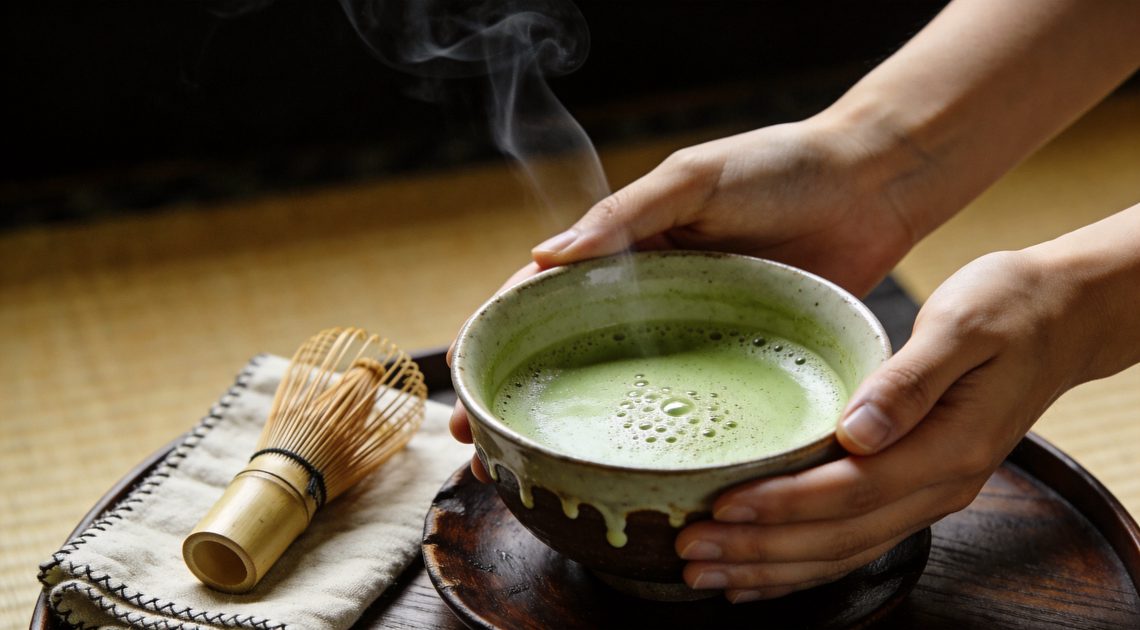
It begins with water. Cold water, heated slowly. The sound of it coming to a boil — not a rolling, aggressive churn, but a soft murmur, what the Japanese call matsukaze, the wind in the pines. The tea bowl is warmed. The whisk is dampened. The powdered tea is measured, not with scales but with a bamboo scoop, three gentle scoops for a bowl. The water meets the powder. The whisk moves — not stirring, but tracing a path, back and forth, until the surface rises into a pale green foam.
This is the Japanese tea ceremony, or chanoyu — the Way of Tea. It takes about fifteen minutes to prepare and drink a single bowl of matcha. The entire ritual, in a formal gathering, can last four hours. To an outsider, this may seem excessive. It is only tea. Why spend so much time on something so simple?
The question contains its own answer. It is precisely because tea is simple that it can carry so much weight. The tea ritual meaning is not hidden in the tea. It is in the act of paying attention to the tea — and through the tea, to the moment, the room, the company, and the self.
A Ritual Born from Presence
Tea ceremony philosophy traces its roots to 9th-century China, where Buddhist monks drank tea to stay alert during long hours of meditation. But it was in Japan, during the 16th century, that tea became a spiritual practice in its own right.
The tea master Sen no Rikyū codified the principles that still guide the Japanese tea ceremony today: wa (harmony), kei (respect), sei (purity), and jaku (tranquility). These are not decorative ideals. They are instructions. Harmony with the other guests and with the season. Respect for the utensils, the host, and the space. Purity of body and mind — symbolized by the cleansing of hands and mouth at the garden basin before entering the tea room. Tranquility that arises, naturally, when the first three are practiced with sincerity.
Rikyū's tea room was famously small — a hut of four and a half tatami mats. The door was low, so that everyone who entered had to bow, leaving status and sword at the threshold. Inside, there was only the alcove with a single scroll and a single flower, the hearth, and the utensils for tea. Nothing extra. Nothing to distract. The room itself was a teaching: strip away what is unnecessary, and what remains becomes sacred.
The Bowl, the Whisk, the Moment
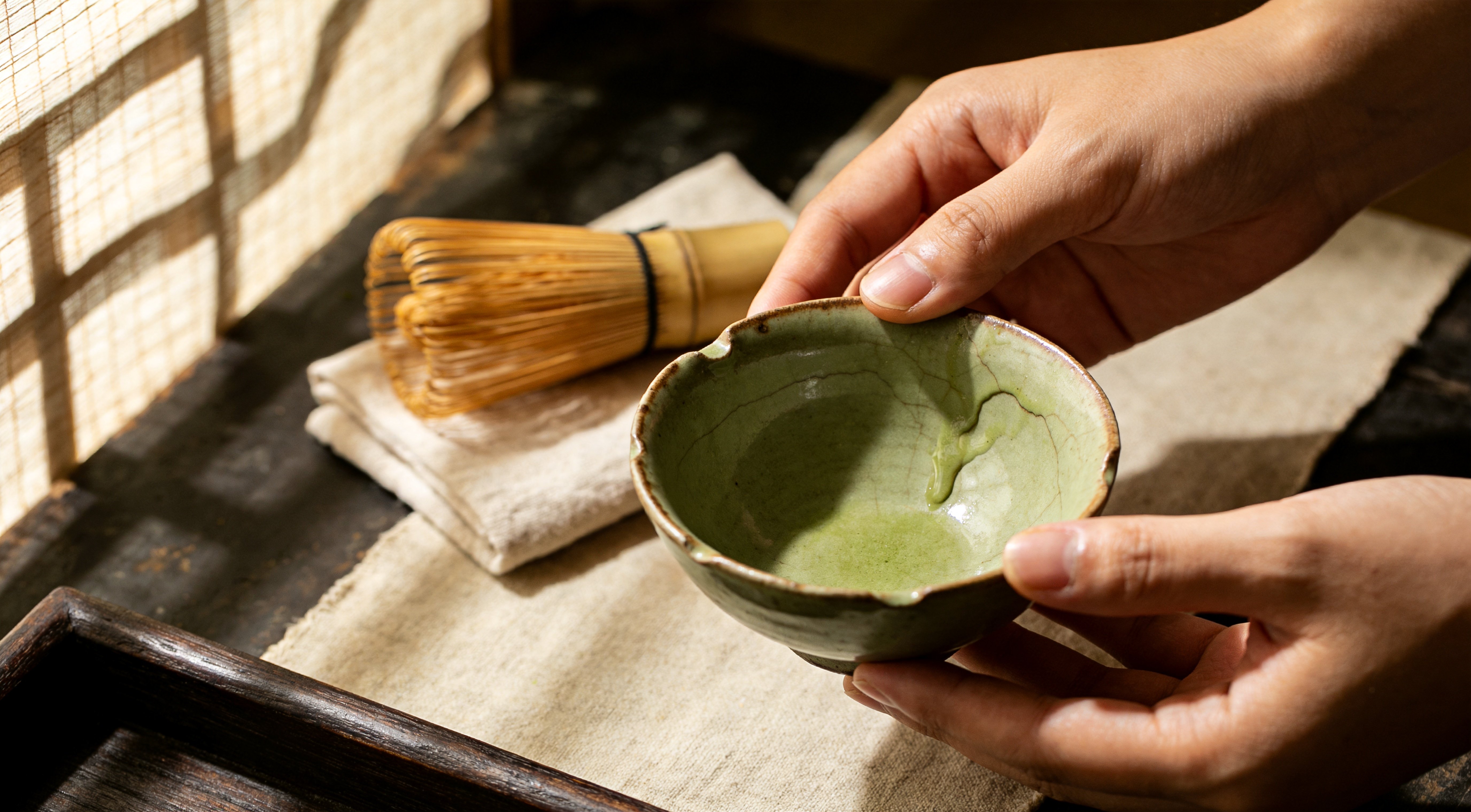
Every object in a mindful tea practice is chosen with intention. The tea bowl — often handmade, with an uneven rim and a glaze that pooled unpredictably in the kiln — is turned in the hands before drinking. The most beautiful side is offered to the guest. The guest admires the bowl, not as a formality but as an act of attention. This object, made by someone's hands, fired in someone's kiln, is here now, in this moment, holding this tea. It will never happen exactly this way again.
This is the quiet heart of tea ritual meaning: the recognition of impermanence. Every tea gathering is ichigo ichie — one time, one meeting. The same people will never gather in the same room, on the same day, with the same light falling through the same paper screen. The tea bowl will never be held at this exact angle again. The sound of the kettle will never make quite the same note.
Knowing this, the only reasonable response is to pay attention.
Small Ceremonies in Everyday Life
You do not need a tatami room or a bamboo whisk to practice the essence of tea ritual. The tea ceremony philosophy is portable. It can enter any kitchen, any morning, any moment you choose to transform the ordinary into something attended to.
The practice is simple. Boil the water. Warm the cup. Measure the leaves. Pour the water and wait — not scrolling, not planning, just waiting — while the tea steeps. When it is ready, hold the cup in both hands. Feel the warmth through the ceramic. Inhale the steam. Take the first sip slowly, as if it were the only sip you would get.
This is not about obsession. It is about presence. The ritual is a frame that holds your attention. Without it, tea becomes what it usually is: a background beverage, consumed while doing something else, barely tasted. With it, tea becomes a small ceremony — a brief, deliberate return to the body and the breath.
This is the mindful tea practice that millions of people, across cultures, have discovered. Not the formal study of chanoyu, which takes years, but the informal commitment to making tea with attention rather than autopilot. The difference is small. The effect, over time, is not.
Why Small Ceremonies Matter Now
We live in a culture that valorizes speed and productivity. Waiting is a waste of time. Efficiency is the highest good. A tea bag dunked in a mug on the way out the door is tea's logical endpoint in such a world.
But something is lost when all ceremony disappears. Not the ceremony of grand occasions — weddings, graduations, state dinners — but the small ceremonies of daily life. The lighting of a candle before dinner. The arranging of flowers in a single vase. The quiet preparation of a bowl of tea.
These small ceremonies are not empty rituals. They are anchors. They pull you out of the river of distraction and place you, briefly but fully, where you are. A tea ritual in the morning says: the day has begun, and I was here for the beginning. A tea ritual in the evening says: the day is ending, and I am letting it go.
This is the deeper tea ritual meaning — not the tea itself, but the pause the tea creates. In a world that rarely stops asking for your attention, a small ceremony is a quiet act of resistance. It reclaims a few minutes for presence. It insists that some things are worth doing slowly, not because they take time, but because they deserve attention.
The Invitation
You do not need special equipment. You do not need training. You need only the willingness to make one ordinary act — something you already do, like brewing tea — into something you do with your whole attention.
Boil the water. Warm the bowl. Watch the steam rise. Drink.
That is the entire teaching. The rest is just tea.
No letters yet — be the first to write.