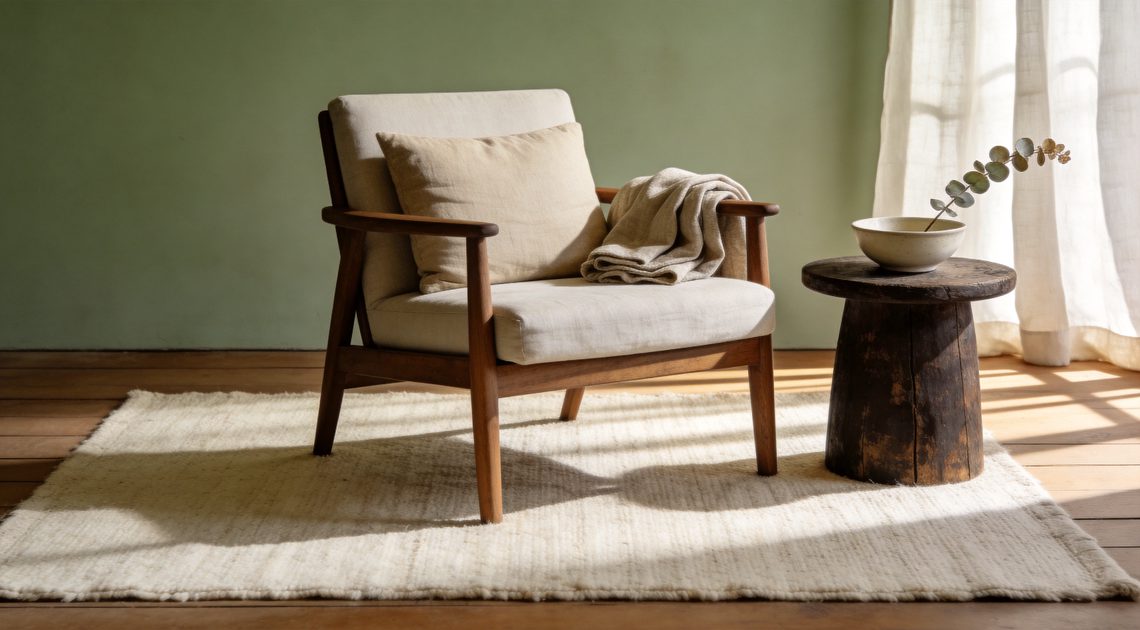
There is a difference between a room that looks calm and a room that feels calm. The first can be achieved with beige paint and a few minimalist accessories. The second requires something deeper — not a style, but a set of choices. Choices about what enters the room, how the light falls, where the eye can rest, and what the hands touch in the course of an ordinary day.
Bringing calm into your home is not about following a trend. It is about designing an environment that supports the kind of life you want to live — one with more stillness, more attention, and more room to breathe. Here are seven ways to begin, none of which require a complete renovation.
1. Let Light Lead the Way
Light is the first element of intentional design, and the one most often overlooked. Harsh overhead lighting is the fastest way to undo every calm choice you have made. A room lit only from above feels exposed. A room lit from multiple low points — a floor lamp with a fabric shade, a rice paper lantern, a single candle — feels held.
Start with natural light. Let it in. Avoid heavy, light-blocking curtains. Use sheer linen panels that diffuse the daylight rather than cutting it off. As evening arrives, switch to warm, low-level sources. Never a bare bulb. Never a cold white LED as the only source. The goal is not brightness. The goal is atmosphere.
Calm home ideas always begin with light because light shapes how every other element in the room is perceived. Soft light reveals texture. Harsh light flattens everything.
2. Choose Natural Materials
Walk into a room and notice what your body registers before your mind does. The floor beneath your feet. The texture of the chair you sit in. The surface of the table your hand rests on. These tactile experiences shape your sense of calm more than any decorative object ever could.
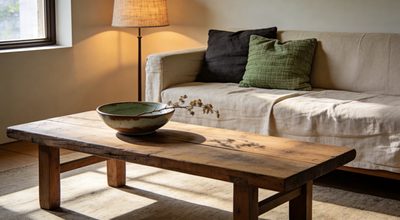
Mindful interior design favors natural materials: wool, linen, wood, clay, stone, cotton, silk. These materials age gracefully. They breathe. A linen cushion at year three is softer than it was on day one. A wooden table grows richer as it absorbs light and oils from hands. A ceramic bowl develops a fine network of crackles over years of use.
Synthetic materials do the opposite. They degrade. They feel cold or slick. They do not invite touch. If you want to bring calm into your home, start from the ground up — a wool rug, linen curtains, wooden furniture with visible grain. The difference is immediate and bodily.
3. Clear Surfaces, Keep Meaning
A cluttered surface is visual noise. It hums with unfinished business — the mail not yet sorted, the objects not yet put away, the small things that accumulate without intention. A calm room needs surfaces that breathe.
This does not mean stripping every shelf bare. It means choosing what stays with care. One ceramic bowl on a side table rather than five. A single meaningful object on a shelf rather than a crowd of forgettable ones. The empty space around an object is what gives it weight.
This is one of the simplest calm home ideas to implement, and one of the hardest to sustain. It requires the discipline to leave space empty — to resist the urge to fill every surface with something. But the reward is a room that feels spacious not because it is large, but because it is intentional.
4. Create a Quiet Corner
Every home needs at least one place that invites stillness. It does not need to be a dedicated meditation room. It can be a chair by a window, a cushion in a corner, a low table with a single candle and a small vase. The only requirement is that it feels separate — visually and energetically — from the busyness of the rest of the home.
This is intentional design at its most personal. The quiet corner is not for guests. It is not for show. It is for you — a place to sit with a cup of tea, to read a few pages, to breathe. Place something meaningful there: a small Kwan Yin statue, a hand-thrown tea bowl, a piece of stone or wood that feels good in the hand. The objects in this corner should all carry a quiet energy.
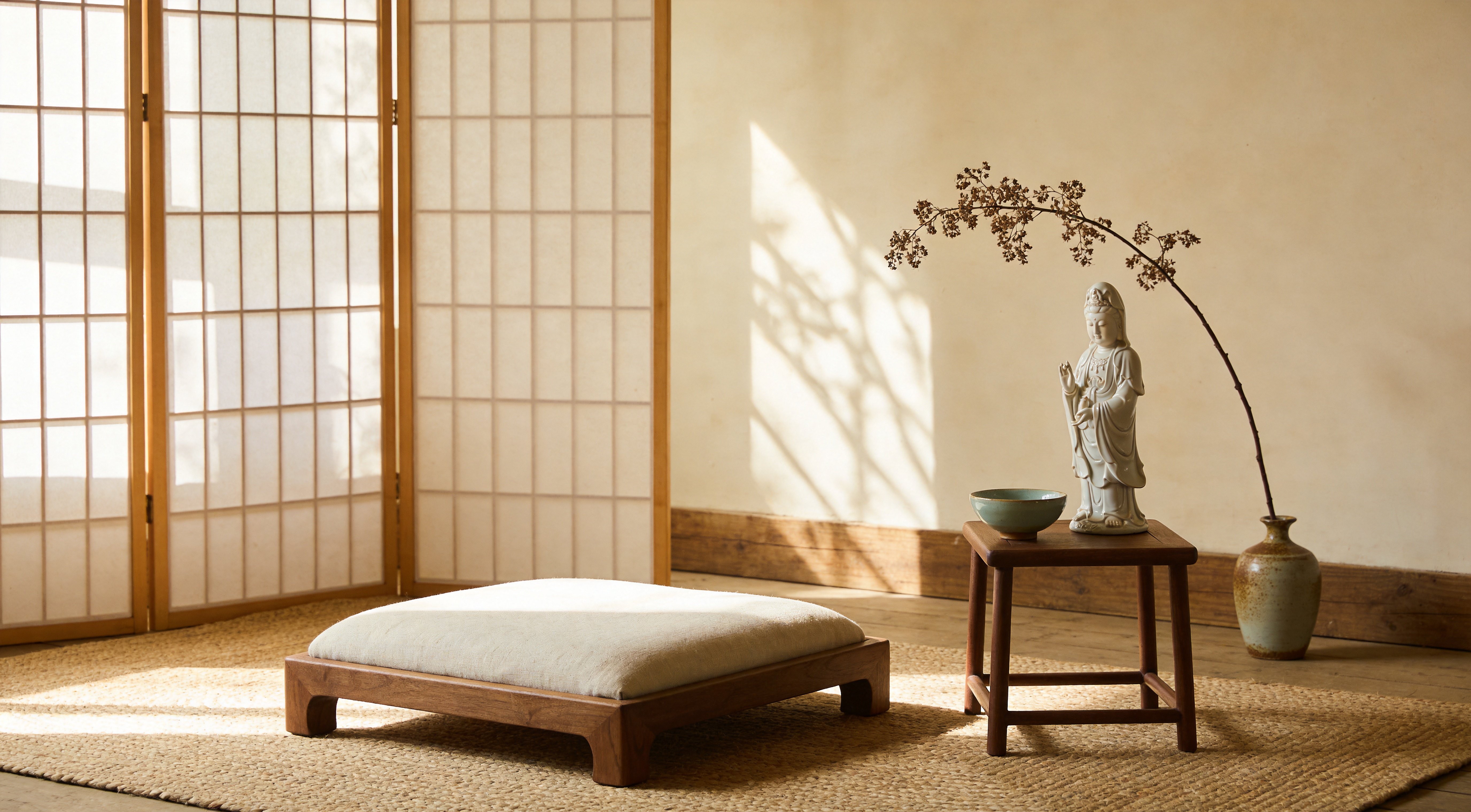
A quiet corner does not need to be large. It only needs to be yours.
5. Bring in Something Living
A room without anything living in it can feel sterile, no matter how beautiful the furniture. A single branch in a vase. A small potted plant. A few stems of dried foliage. These elements remind you that the room is part of a larger world — one that grows, changes, and breathes.
In mindful interior design, living elements are not decorative afterthoughts. They are part of the room's atmosphere. A branch of plum blossoms in a stoneware vase changes the energy of an entire corner. A single orchid on a windowsill catches the light differently as the day moves.
Choose sparingly. One living element is enough. The goal is not abundance but presence.
6. Hide What Hums
Modern homes are full of devices that emit low-grade stress: blinking routers, charging cables, screens that never fully turn off. These objects hum with distraction. They pull attention even when you are not consciously looking at them.
One of the most practical calm home ideas is to hide them. Tuck the router behind a piece of furniture. Store charging cables in a drawer or a woven basket. Keep screens out of the bedroom and out of the quiet corner. The goal is not to pretend technology does not exist. It is to keep it in its place — available when needed, invisible when not.
A room free of blinking lights and tangled cords already feels calmer, before you have changed anything else.
7. Let the Room Evolve Slowly
A calm home is never finished in a weekend. It accumulates, slowly, over time. The ceramic cup from a trip. The textile found in a small shop. The piece of art that took years to find. These objects arrive in their own time, and that is part of their value.
Intentional design is not a deadline. It is a practice. Allow yourself to live with empty spaces for a while. Wait for the right object rather than filling the void with something close enough. The discipline of patience is itself a form of calm.
Over time, the room will come to reflect not a trend or a catalog, but the life actually lived within it. That is the quiet promise of bringing calm into your home: a space that feels like yours, gathered slowly, chosen with care, and alive with stillness.
No letters yet — be the first to write.