There is a stillness that settles around a Kwan Yin goddess statue. Whether carved from white jade, cast in bronze, or painted on a silk scroll, her downcast eyes and gentle smile seem to hold centuries of silent listening. Known across East Asia as the bodhisattva of compassion, the Kwan Yin goddess is one of the most beloved figures in Buddhist tradition – and increasingly, she finds a place in homes far beyond the temples where her devotion began.
Her name means one who hears the cries of the world. It is a fitting description. Unlike many deities who sit apart, Kwan Yin leans toward suffering, offering comfort without judgment. She does not demand worship; she simply invites you to slow down and breathe. That quiet invitation is why I have kept a small porcelain statue of her on my meditation shelf for years, a reminder that compassion begins at home, in the small pauses between tasks.
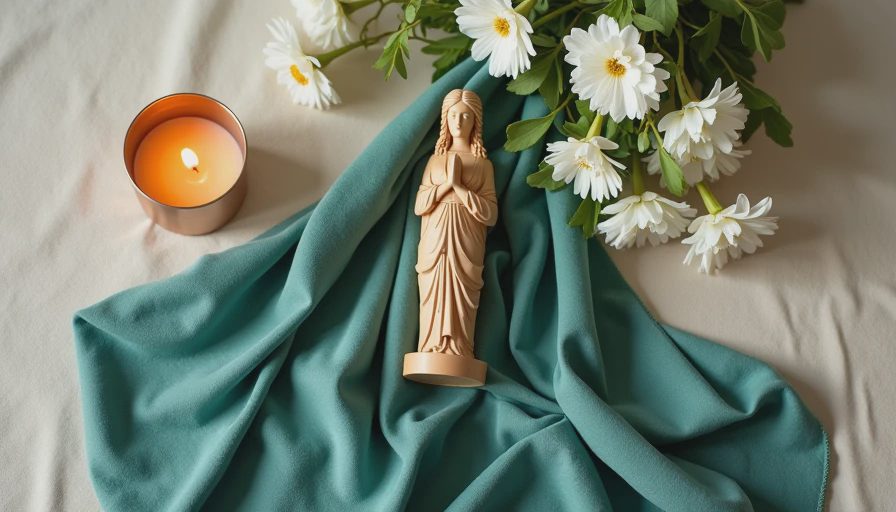
Who Is Kwan Yin?
Originally a male bodhisattva in Indian Buddhism named Avalokiteshvara, the figure transformed as it traveled through China, gradually taking on feminine attributes. By the Tang dynasty, the female Kwan Yin goddess had become the primary representation. She embodies the active quality of compassion – not pity but a deep, responsive care that manifests in action.
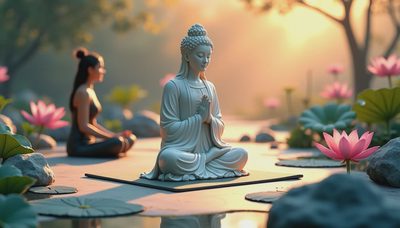
She is often depicted holding a willow branch, symbolizing flexibility and the ability to bend without breaking. In another hand, a vase of pure water represents the cleansing of suffering. Her lotus seat signifies purity rising from muddy waters. Every detail carries meaning, inviting contemplation rather than passive viewing.
The Many Forms of Kwan Yin
The Kwan Yin goddess appears in several iconic forms, each with its own emphasis. Thousand-Armed Kwan Yin (Qianshou Guanyin) extends countless arms, each with an eye on its palm, symbolizing her ability to see and reach all who need help. White-Robed Kwan Yin (Baiyi Guanyin) is the most popular in Chinese art—a serene figure draped in flowing white, often seated by a waterfall or under a pine tree, embodying pure clarity.
Then there is the Water-Moon Kwan Yin (Shuiyue Guanyin), depicted seated on a rocky outcropping above water, reflecting on the moon. This form speaks to seeing the world as transient and beautiful, like a reflection that cannot be grasped. Each variation offers a different door into her energy, making it possible to connect with the aspect that speaks most to your own life.
Bringing the Kwan Yin Goddess Into Your Home
To invite a Kwan Yin goddess into your home is to place a small altar to stillness. She does not need a formal shrine—a quiet corner, a shelf where you pause each morning, a windowsill that catches the afternoon light. The act of seeing her each day is itself a meditation. Her presence asks nothing but reminds you of what matters.
I have seen her in a friend's entryway, greeting every visitor with unspoken kindness. Another friend keeps a tiny ceramic version on her desk at work, a touchstone for patience during stressful conference calls. The Kwan Yin goddess adapts to the space you give her. She does not demand faith; she simply holds space for whatever arises.

The Symbolism Behind the Serenity
Every element of a Kwan Yin goddess statue or painting is a lesson in mindful living. The lotus flower she holds or sits upon grows from mud, a reminder that beauty and compassion can emerge from difficulty. The willow branch is supple yet strong—bending in the wind, not snapping. The vase of sweet dew she pours is the offer of refreshment to a weary world.
Even her posture teaches. She rarely stands upright and assertive. Instead, she sits in royal ease (lalitasana), one leg folded, the other dangling, as if ready to rise and help at any moment. Her eyes are half-closed, not in sleep but in inward attention. The Kwan Yin goddess models a compassion that is both grounded and active, soft and capable.
Choosing a Kwan Yin Statue for Your Space
When selecting a representation of the Kwan Yin goddess, trust your instinct. A finely carved wooden statue from a living tradition carries a different energy than a mass-produced resin piece. Look for details: the gentle curve of her fingers, the expression in her eyes, the quality of the lotus petals. She should feel alive, even in stillness.
I have a small soapstone Kwan Yin that cost very little but feels precious because of its worn edges—someone before me held her often. If possible, buy from a source that honors the craft. You are not just acquiring decor; you are choosing a companion for your inner life. The Kwan Yin goddess rewards attention, not expense.
In a world that rewards speed and interruption, the Kwan Yin goddess is a quiet rebellion. She does not rush. She does not shout. She simply sits, listening, her compassion radiating outward like the moon's reflection on still water. Perhaps that is why she endures—not as an object of belief, but as a presence that helps us remember the gentleness we carry inside.

No letters yet — be the first to write.