Who Is Kwan Yin? The Bodhisattva of Compassion in Chinese Buddhism
If you have ever walked into a Buddhist temple, a Chinese home, or a shop selling spiritual objects, you have likely seen a serene figure dressed in flowing white robes. That figure is Kwan Yin, the bodhisattva of compassion. But who is Kwan Yin, exactly? She is not a goddess in the traditional sense, but a being who has chosen to stay in the cycle of rebirth to help all sentient beings achieve enlightenment. Her name, Guan Yin, means "Observing the Sounds of the World" — she hears the cries of every being in distress.
The Origins of Kwan Yin
Kwan Yin began as the male Indian bodhisattva Avalokiteshvara, a figure of infinite compassion in Mahayana Buddhism. As Buddhism traveled the Silk Road into China, Avalokiteshvara gradually transformed into a female form. By the Song dynasty, Kwan Yin had become the maternal, merciful figure we recognize today. In Chinese Buddhism, she is often called Guan Shi Yin, "The One Who Perceives the Sounds of the World." Her name reflects her vow: to respond instantly to anyone who calls upon her with a sincere heart.
The Symbolism and Attributes of Kwan Yin
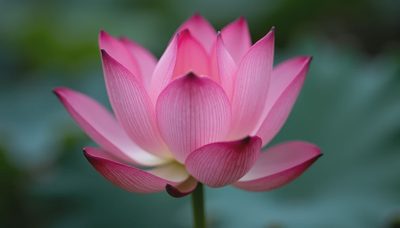
In traditional iconography, Kwan Yin is depicted with a white robe symbolizing purity. She may hold a vase of holy water, a willow branch for healing, or a lotus flower representing enlightenment. Often she holds an infant, giving her the aspect known as "Kwan Yin of the Children," a figure especially beloved by those seeking fertility or the protection of children. A common statue shows her seated on a lotus throne, hands folded in meditation, eyes half-closed in a state of deep compassion. If you have ever wondered who is Kwan Yin based on these symbols, the answer is: a reminder of mercy in a world that needs it.

How Kwan Yin Appears in Modern Homes
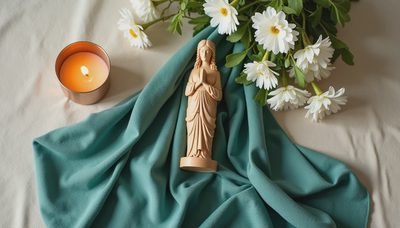
Many people today keep a Kwan Yin statue or painting in their living room, meditation space, or entryway. She is not just a religious figure; she has become a symbol of peace and gentle strength. In feng shui, placing an image of Kwan Yin in the home is said to invite protective, loving energy. When you see a serene porcelain figure of a woman in white robes carrying a lotus, you may ask yourself who is Kwan Yin and what she represents. The answer is personal: for some she is a deity, for others a reminder to cultivate compassion in daily life.
The Legend of Miao Shan: Kwan Yin's Human Story
One of the most beloved stories in Chinese Buddhism tells of Princess Miao Shan, who refused to marry and instead devoted herself to spiritual practice. Her father, the king, was furious and ordered her execution. But when the executioner tried to kill her, his sword shattered. Eventually she died, and upon entering the afterlife, she saw the suffering of beings and vowed to relieve them. She was reborn as Kwan Yin. This tale illustrates why Kwan Yin is seen as a savior figure, one who has walked a human path. The legend explains who is Kwan Yin in deeply human terms — a princess who chose compassion over power.

Why Kwan Yin's Compassion Resonates Today
In our fast-paced world, the idea of a being who listens without judgment is profoundly comforting. Kwan Yin embodies unconditional compassion. She does not demand worship — she simply responds to calls for help. This message is universal. Understanding who is Kwan Yin is not just about historical facts; it is about connecting with a quality we all need. Her popularity in the West has grown alongside the mindfulness movement, as people seek figures of inner peace. A statue of Kwan Yin in your home can serve as a daily reminder to pause, breathe, and remember that compassion begins with ourselves.
Choosing a Kwan Yin Statue for Your Space
If you feel drawn to her presence, consider a statue that speaks to you. Many are made of ceramic, wood, or resin. Look for one with delicate hand-painted details. A small figure on a shelf is enough to create a focal point for meditation. Place her in a quiet corner where you can see her while sitting in your practice. Some prefer the white-robed form, others the multi-armed version that symbolizes her ability to help everyone at once. Whether you choose a simple porcelain piece or an antique bronze, the meaning remains the same: an invitation to embody compassion.
How to Connect with Kwan Yin in Daily Practice
You do not need to be a Buddhist to benefit from Kwan Yin's energy. Start by setting aside a few minutes each day to sit quietly in front of her image. Take three slow breaths and imagine a soft white light surrounding you. Silently repeat a simple phrase like "May I be filled with compassion. May all beings be at ease." This practice, called loving-kindness meditation, aligns with Kwan Yin's vow. Another way is to chant her name: "Namo Guan Shi Yin Pusa." The sound itself can calm the mind. You can also offer a small gesture before meals or before sleep — a bow, a candle, or a cup of water. Over time, you may notice yourself responding more patiently to stress. The figure of Kwan Yin becomes a mirror of the compassion you already carry. This is not about worship; it is about remembering your own capacity for kindness. Many people find that keeping a small journal near her statue to jot down moments of gratitude or forgiveness deepens the connection. Whether you follow these steps or create your own ritual, the key is consistency. Even five minutes a day can shift your outlook.
Conclusion
So who is Kwan Yin? She is a bodhisattva, a legend, a symbol, and for many, a quiet companion on the journey toward a kinder life. Her story transcends religion and speaks to the universal desire for mercy and peace. As you move through your day, you might recall her calm gaze and let it guide your actions. In a world that often feels loud and hurried, Kwan Yin offers a gentle reminder that listening is a form of love.

No letters yet — be the first to write.