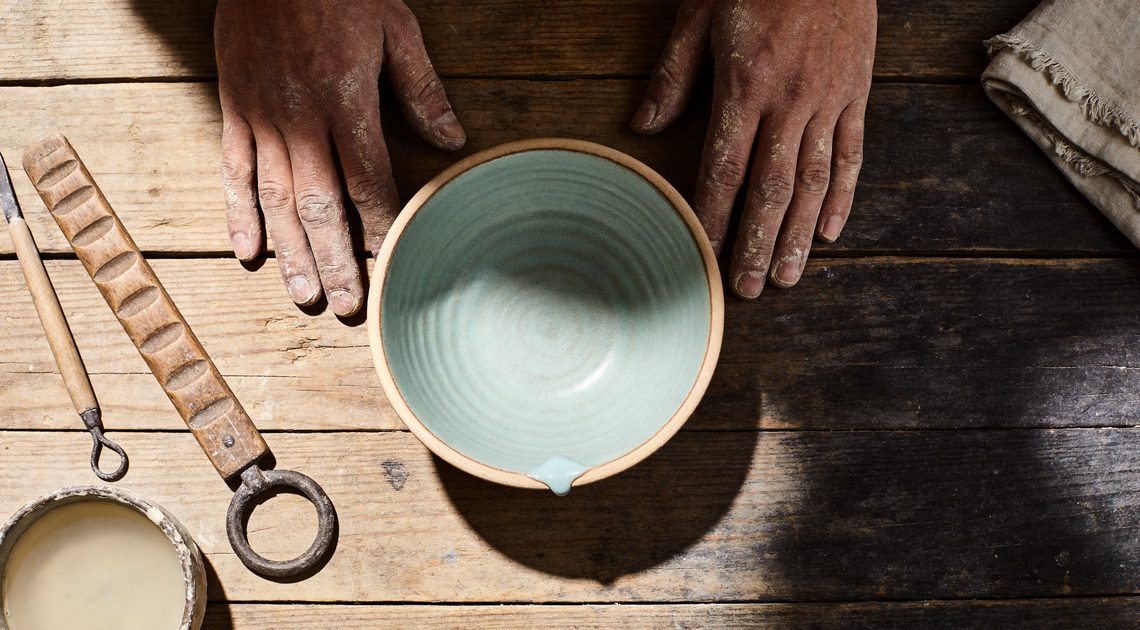
There is a quiet moment that happens when someone picks up a handmade object for the first time. They turn it over in their hands. Their fingers find the uneven spot in the glaze, the tool mark on the wood, the slight asymmetry that reveals the presence of a maker. Something shifts. The object is no longer just a bowl, a vase, a cup. It is a small piece of someone's life — shaped by their hands, fired in their kiln, finished with their attention.
Traditional craftsmanship does something that mass production cannot. It imbues objects with meaning. Not the kind of meaning that can be printed on a tag or summarized in a product description, but the kind that accumulates in the making — hour by hour, gesture by gesture, decision by decision. When that object enters a home, it does not just fill a function. It carries a story. And over time, it changes the atmosphere of the room it inhabits.
The Presence of the Maker
Every handmade object contains invisible evidence of the person who made it. The slight irregularity in the rim of a wheel-thrown bowl where the potter's hand hesitated for a fraction of a second. The drip in the glaze where it pooled and ran during firing. The tool marks on a carved wooden tray — not mistakes, but signatures. These are not flaws to be corrected. They are the very thing that distinguishes handmade home objects from their factory-made counterparts.
In mass production, the goal is uniformity. Every mug identical. Every surface smooth. Every product indistinguishable from the one before it. The worker operating the machine leaves no trace. The object arrives in your home anonymous — functional, often attractive, but silent.
Artisan crafts tell a different story. Hold a hand-thrown tea bowl, and you hold the potter's morning. The clay was wedged by hands that have wedged clay for years. The wheel was turned at a particular speed. The glaze was mixed from a recipe refined over decades. The kiln was loaded and fired and cooled and opened — and this particular bowl emerged, unlike any other that came out of that firing or any that will come after.
This is the first way that traditional craftsmanship changes the meaning of an object: it restores the presence of the maker. The object is no longer a product. It is a meeting — between your hands and hands you will never meet.
Objects That Age Gracefully
There is another difference between handmade and machine-made, and it reveals itself slowly. Mass-produced objects tend to degrade. They chip, they fade, they look worse with age. They are designed for replacement, not for longevity.
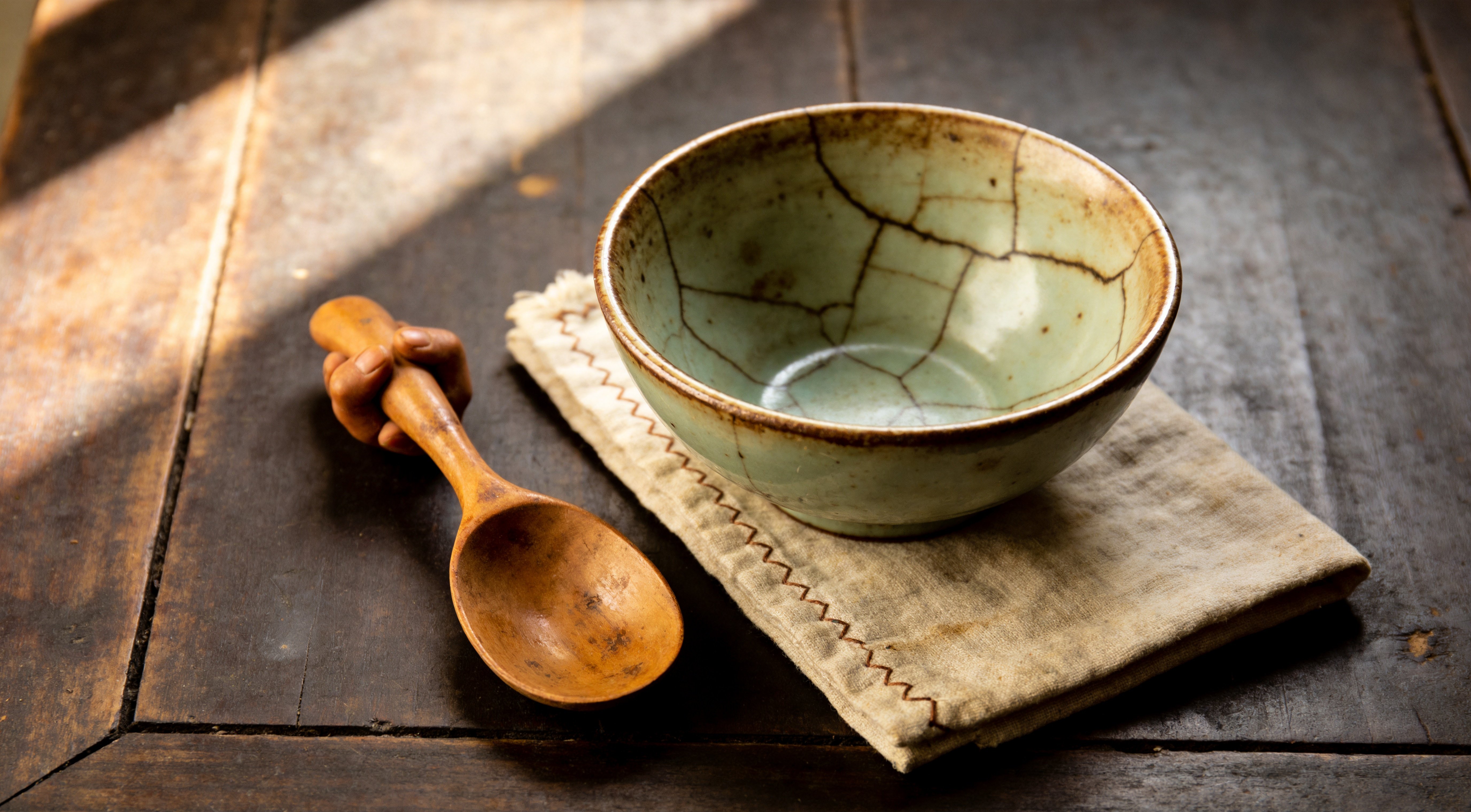
Handmade home objects do the opposite. A linen cushion softens and becomes more comfortable. A wooden cutting board develops a patina from years of oil and use. A ceramic bowl with a crackled glaze absorbs tea over time, the cracks darkening into a pattern that tells the story of every cup it has held. A brass tray loses its shine and gains something richer — a warm, mellow glow that no factory finish can replicate.
This is the quiet work of the meaning of handmade: it reveals itself over time. The object you bring home today will not be the same object in five years. It will have changed. And so will you. The relationship between you and the object deepens rather than fades. This is the opposite of planned obsolescence. It is planned permanence.
The Weight of Tradition
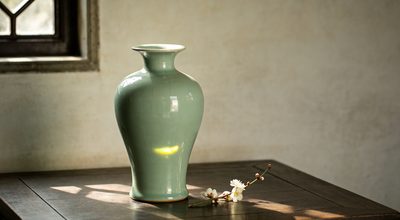
Some handmade objects carry more than the presence of their maker. They carry an entire lineage. A celadon vase from a Longquan kiln is not just the work of one potter. It is the product of a tradition stretching back to the Song Dynasty — generations of potters refining glazes, sharing techniques, passing knowledge from master to apprentice across centuries.
When you bring such an object into your home, you are not just acquiring a decorative piece. You are entering into relationship with that lineage. The vase sits on your shelf, and silently, without demanding anything, it connects your living room to a workshop in Zhejiang, to a kiln fired with specific wood, to a recipe for green glaze that took lifetimes to perfect.
This is the deepest layer of what traditional craftsmanship offers: a thread connecting the present moment to a much longer story. In a culture that tends to flatten time — where everything is new, now, next — objects made within living craft traditions offer a different experience of time altogether. They remind you that some things cannot be rushed. Some things are worth taking generations to get right.
How These Objects Change a Room
A room furnished with handmade home objects feels different from a room furnished with mass-produced goods. The difference is not always easy to name, but it is unmistakable. The room feels more grounded. More textured. More alive.
Part of this is purely sensory. Handmade objects tend to be made from natural materials — wood, clay, linen, stone, silk — that age well and feel good to touch. Their surfaces are varied rather than uniform. Light plays differently across a hand-glazed ceramic surface than it does across a factory-applied finish.
But part of it is something less tangible. A room filled with objects that were made by people — rather than churned out by machines — holds a different kind of energy. It feels inhabited by care. The objects in the room are not just taking up space. They are radiating something quiet: the patience of their making, the attention of their maker, the tradition they belong to.
Choosing Meaning Over More
The invitation of traditional craftsmanship is not to fill your home with expensive things. It is to fill it with fewer things, chosen more carefully. One handmade bowl instead of five factory mugs. One carved wooden tray instead of a drawer full of plastic alternatives. One piece of pottery that carries a lineage instead of a shelf of anonymous décor.
When you choose handmade home objects, you are choosing a different relationship to the things you live with. You are choosing depth over accumulation. Story over convenience. Meaning over more.
And over time, the objects you chose slowly begin to feel less like possessions and more like companions — quiet witnesses to the life you are living, in a home that feels, finally, like yours.
No letters yet — be the first to write.