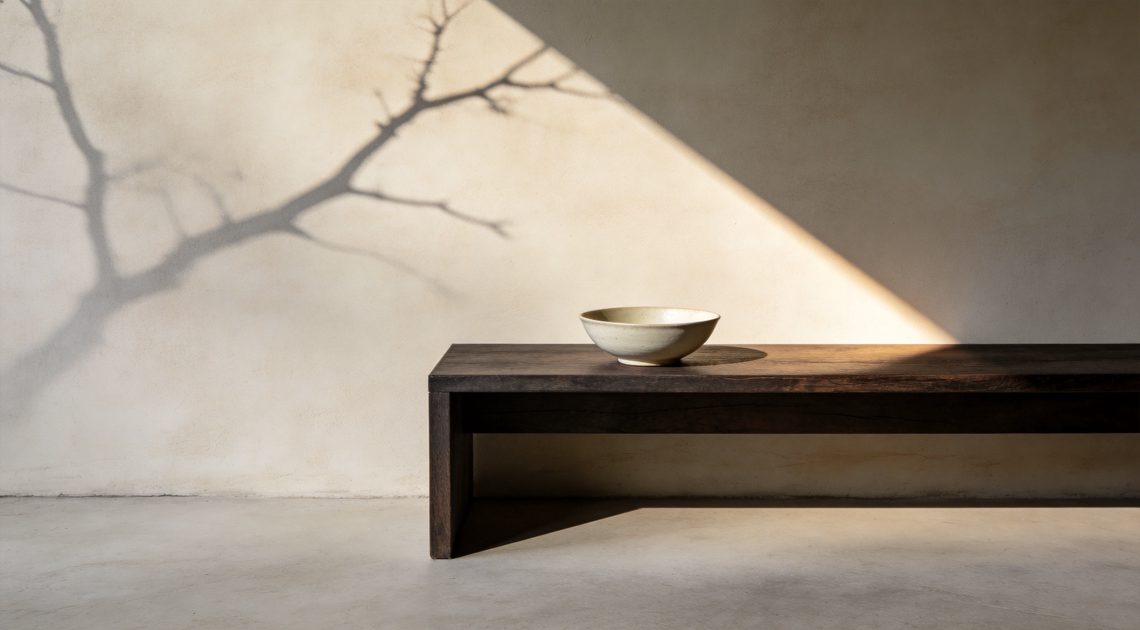
There is a word in Japanese that does not translate neatly into English. It is a small word — a single syllable, barely a breath — but it carries an entire way of seeing. The word is Ma.
In music, Ma is the pause between notes, the silence that gives the sound its shape. In calligraphy, it is the white space around a brushstroke, the emptiness that makes the ink feel alive. In architecture, it is the gap between structures, the interval where light and shadow meet. And in the home, Ma is the space between objects — the deliberate, meaningful emptiness that allows everything else to breathe.
Western culture tends to treat empty space as a problem. A bare wall needs a painting. An empty corner needs a chair. A surface with nothing on it is incomplete, waiting to be filled. This instinct runs deep. But Ma suggests something different — something quieter, and far more radical. The emptiness is not missing content. The emptiness is the content.
What Ma Actually Means
The Japanese character for Ma is composed of two parts: the gate and the sun. It is an image of light seen through a gap, a threshold, a space between. This visual etymology is revealing. Ma is not mere absence. It is an opening — a place where something can be perceived, where light can pass through.
The Ma concept appears across Japanese arts. In Noh theater, the actor's stillness between gestures carries as much weight as the movements themselves. In Ikebana flower arrangement, the space between stems is as carefully considered as the flowers. In a traditional tea room, the tokonoma alcove contains only a single scroll and a single flower — not because more would not fit, but because more would diminish the experience of each.
What all these examples share is an understanding that meaningful emptiness is not a void. It is a presence of a different kind. The pause is not empty time. It is time charged with potential. The space is not dead air. It is where the viewer, the listener, the dweller enters in.
The Crowded Home
Look around the average living room. The coffee table holds a stack of books, a decorative tray, a candle, a remote control, a small bowl of potpourri. The shelves are filled — books, framed photos, small objects collected over years. The walls are covered with art, mirrors, shelves. Every surface is activated. Every corner is claimed.
This is not a design failure. It is a cultural default. We have been taught that a rich life looks like a full room. But the result, too often, is a room that offers the eye no place to rest — a visual experience closer to noise than to music.
Japanese aesthetics offers an alternative. A room shaped by Ma does not feel empty. It feels spacious, in the truest sense. Not spacious as in large square footage, but spacious as in there is room for me here. Room to breathe. Room to think. Room to simply be, without the constant hum of objects competing for attention.
How to Bring Ma Into Your Home
This is not about throwing everything away. Mindful interior design is not minimalism by another name. It is about intentionality — about choosing what stays and, just as importantly, choosing what space remains unoccupied.
Start with one surface. A shelf. A side table. A mantle. Remove everything from it. Then place back only one object — something that genuinely matters to you. A hand-thrown ceramic bowl. A small framed photograph. A single branch in a stoneware vase. Now step back and look at the space around that object. That space is Ma. It is not wasted. It is working.
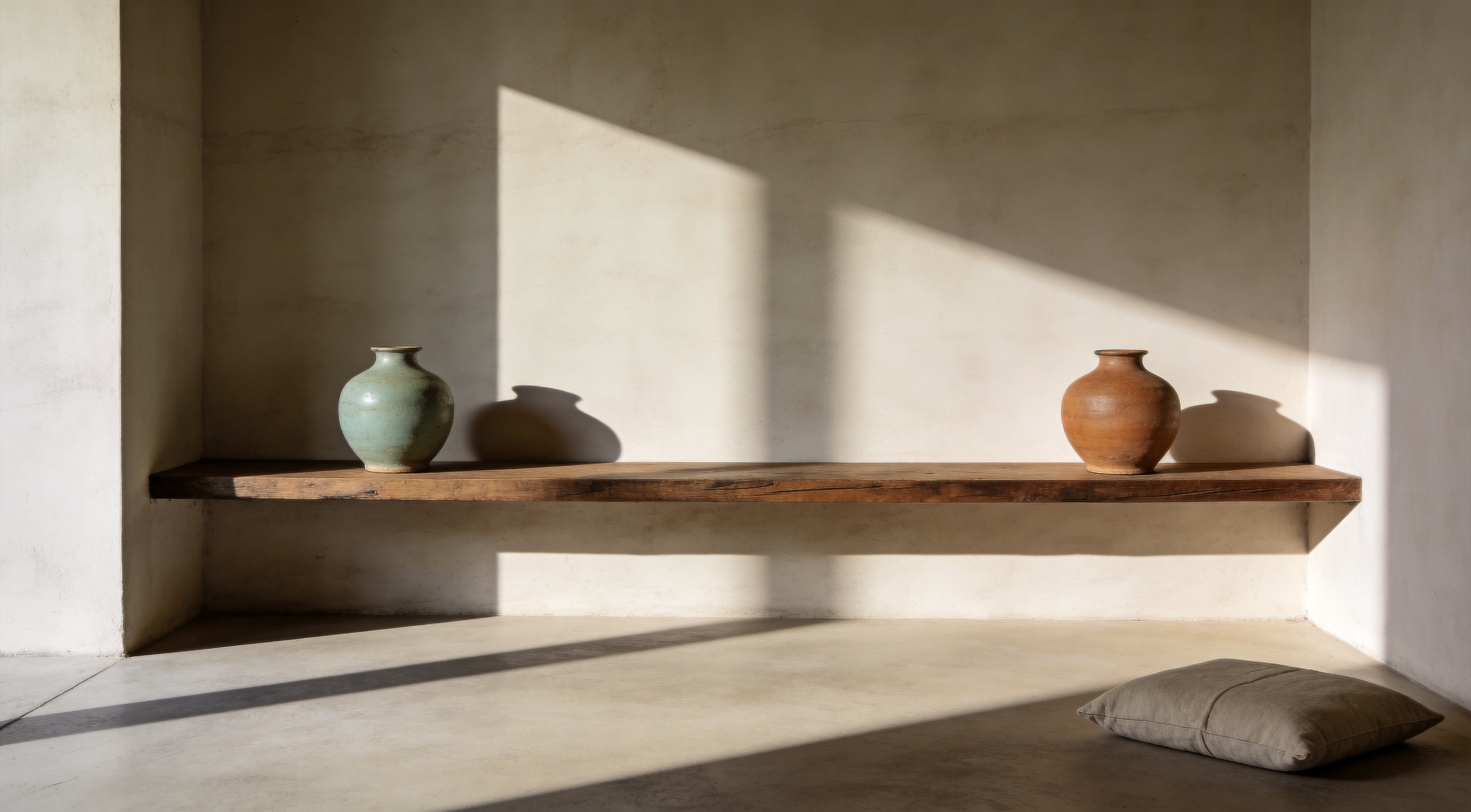
The negative space design principle extends beyond surfaces. Consider the gaps between furniture. In many Western homes, sofas are pushed against walls, tables are crowded together, and the center of the room becomes a kind of traffic zone rather than a place to pause. Pulling furniture slightly away from walls, leaving open floor space, creating clear pathways — these are all expressions of Ma. The room will feel larger not because it is larger, but because it breathes.
Even the relationship between objects can embody Ma. Two objects placed close together create a tension, a relationship, a visual conversation. Place them too close, and that tension collapses into clutter. Place them far enough apart, and the space between them hums with something unspoken. Finding that distance — the exact interval where the emptiness feels alive — is the practice.
Ma Is Not About Deprivation
It is important to say this clearly: Ma is not an argument for austerity. It is not about denying yourself beauty or comfort or the pleasure of objects. It is about recognizing that objects are experienced in relationship to the space around them. A single celadon vase on an otherwise bare shelf is more beautiful than the same vase crowded among five others. The emptiness amplifies the object. The silence amplifies the note.
This is the meaningful emptiness at the heart of Japanese aesthetics — not the absence of things, but the presence of space as a thing in itself. When you begin to see Ma, you begin to see it everywhere. The pause in a good conversation. The margin around a page of text. The gap between two buildings where the sky comes through.
Your home needs Ma not because it needs less, but because it needs balance. Sound and silence. Object and interval. Presence and pause. This is not a design trick. It is a way of living with more awareness — of what you bring in, and of what you leave open.
A room with Ma does not feel like something is missing. It feels like something is possible.
No letters yet — be the first to write.