Kwon Yin, also known as Kwan Yin or Guanyin, is one of the most beloved figures in East Asian Buddhism. She embodies compassion, mercy, and the gentle power of listening to the world's suffering. Her name means "the one who perceives the sounds of the world" — a reminder that true compassion begins with attention. For centuries, her image has graced temples, gardens, and homes, offering a quiet focal point for meditation and reflection. In recent years, her likeness has found its way into Western interiors, not merely as decor but as a meaningful symbol of calm and kindness.
But who is Kwon Yin, really? And how can you invite her energy into your space without reducing her to a trend? This article explores her origins, her symbolism, and practical ways to honor her presence in your home.

Who Is Kwon Yin?
Kwon Yin is the bodhisattva of compassion — a being who has delayed her own enlightenment to help all sentient beings achieve liberation. She is often depicted as a graceful woman in flowing white robes, sometimes holding a vase of pure water, a lotus flower, or a willow branch. These objects are not arbitrary: the water purifies, the lotus symbolizes spiritual growth, and the willow bend without breaking, teaching flexibility. Her origin story traces back to India as Avalokiteshvara, a male bodhisattva, who gradually became female in Chinese tradition. Today, she is revered across China, Japan, Korea, and Vietnam, and her image is one of the most recognizable in Buddhist art.
What makes her especially approachable is her accessibility. She is not a distant deity but a compassionate presence who hears every cry. This is why so many people, even those who do not consider themselves Buddhist, feel drawn to her statue. She represents the ideal of unconditional love — the kind that asks nothing in return.
Bringing Kwon Yin Into Your Home
If you want to invite Kwon Yin into your living space, intention matters more than size or price. A small porcelain figure on a shelf can carry as much meaning as a large bronze sculpture in a garden. The key is placement. Choose a spot where you will see her daily — a meditation corner, a reading nook, or even a hallway table. Avoid cluttered areas or spots near electronics; her energy thrives in stillness.
Traditionally, she is placed facing the entrance of a home, symbolizing her role as a guardian of the threshold. But you can also place her in a room where you seek peace — perhaps in your bedroom or a quiet study. Some people set a small offering of water, a flower, or incense at her feet as a daily ritual. This is not worship in the Western sense but a gesture of gratitude and mindfulness.
When selecting a statue for your home, consider the material. Hand-carved wood brings warmth and a sense of age. White porcelain feels clean and delicate. Resin reproductions are affordable but may lack the soul of artisan-crafted pieces. Personally, I prefer the subtle grain of rosewood or the cool smoothness of celadon. Each material carries a different energy — take your time choosing one that resonates with you.
Creating a Small Altar for Kwon Yin
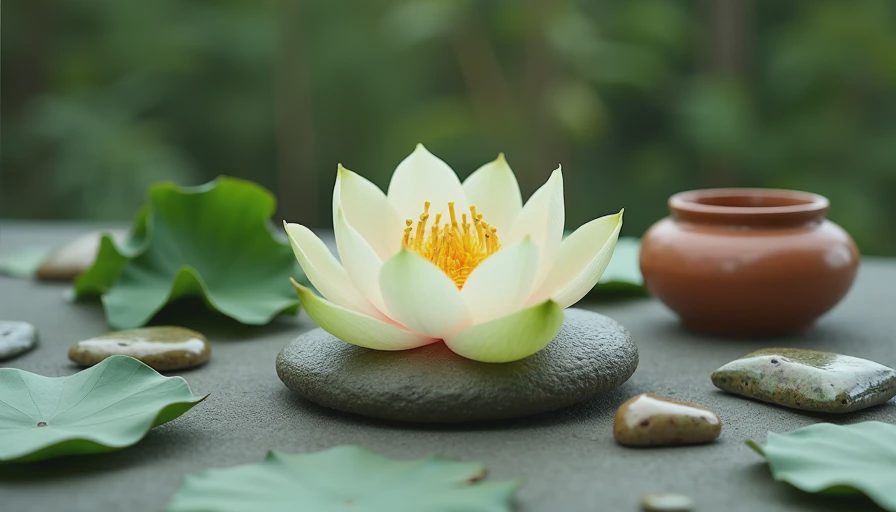
An altar does not need to be elaborate. A simple tray, a candle, and a small vase for a fresh flower can transform any surface into a sacred space. Place your statue at the center. Add elements that speak to her symbolism: a small bowl of water, a lotus-shaped candle holder, or a piece of quartz. The act of setting this space can become a meditation in itself — a way to slow down and connect with the qualities you wish to cultivate.
If you practice meditation, sit facing the statue. Let her serene expression remind you to breathe. You might silently repeat a phrase like "May I be a source of compassion" or simply rest your gaze on her face. Over time, the statue becomes less an object and more a presence — a quiet ally in your daily practice.
Kwon Yin and Mindfulness in Everyday Life
The true gift of the Kwon Yin tradition is not the statue itself but the inner quality it represents. Every time you see her, you are invited to pause, soften, and remember what matters. This is mindfulness in action. You don't need a formal altar; even a small card or a pendant can serve as a reminder. The goal is to carry her compassionate gaze into your interactions — with yourself and with others.
In a world that often rewards speed and efficiency, the image of Kwan Yin stands for patience, listening, and gentle strength. She asks nothing of you except that you stop, for just a moment, and truly hear the world around you.
Whether you have known her for years or are just discovering her, may the spirit of peace and compassion that she embodies bring a little more calm into your home and heart.



No letters yet — be the first to write.