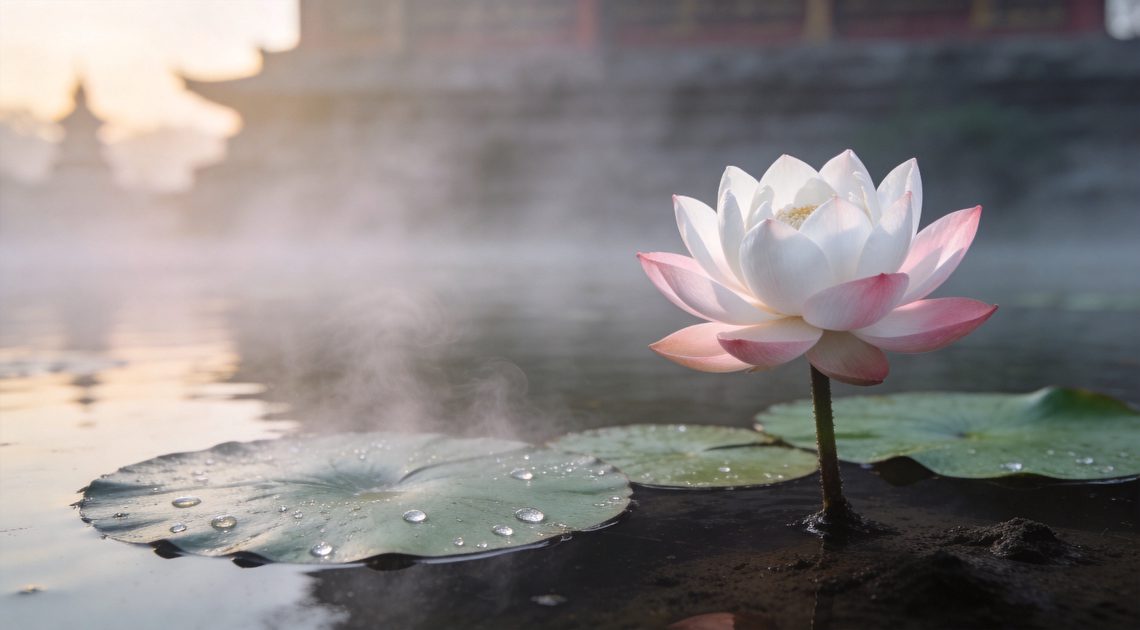
There is a reason the lotus flower appears everywhere once you start looking. It floats on temple ponds in Kyoto. It is carved into the pedestals of Buddhist statues. It blossoms across silk paintings, stone friezes, and the embroidered hems of ceremonial robes. It shows up in meditation spaces, on yoga studio walls, in the names of sutras and the hands of deities. It is, without question, one of the most enduring symbols in the Eastern world.
And yet, for all its visibility, the lotus flower meaning is often flattened in Western contexts into something vague and inspirational — a generic emblem of peace or wellness, stripped of its cultural roots and spiritual weight.
The lotus deserves better. Its symbolism is layered, ancient, and far more specific than most people realize. To understand what the lotus represents is to understand something essential about how Eastern traditions view the human journey — from darkness to light, from ignorance to clarity, from the mud to the open sky.
The Flower That Refuses to Be Stained
The lotus flower grows in shallow, murky water. Its roots anchor deep in the mud. Its stem pushes upward through the dark, through the water, until it breaks the surface. And when it blooms, its petals are immaculate — untouched by the mud below, unsoiled by the water it traveled through.
This biological fact is the foundation of lotus flower symbolism across nearly every tradition that has encountered the plant. The lotus is not beautiful despite its origins. It is beautiful because of them. The mud is not an obstacle to overcome. It is the very ground of the lotus's becoming. Without it, there is no flower.
This is the first lesson of the lotus meaning: purity is not the absence of difficulty. It is the capacity to move through difficulty without being defined by it. The lotus does not pretend the mud does not exist. It simply does not carry the mud with it into the bloom.
The Lotus in Buddhism
In Buddhist lotus iconography, the flower carries multiple layers of meaning. It represents the path of enlightenment — the journey from ignorance and suffering toward awakening. Just as the lotus rises from mud through water into air and light, so too does the practitioner rise from attachment through practice into liberation.
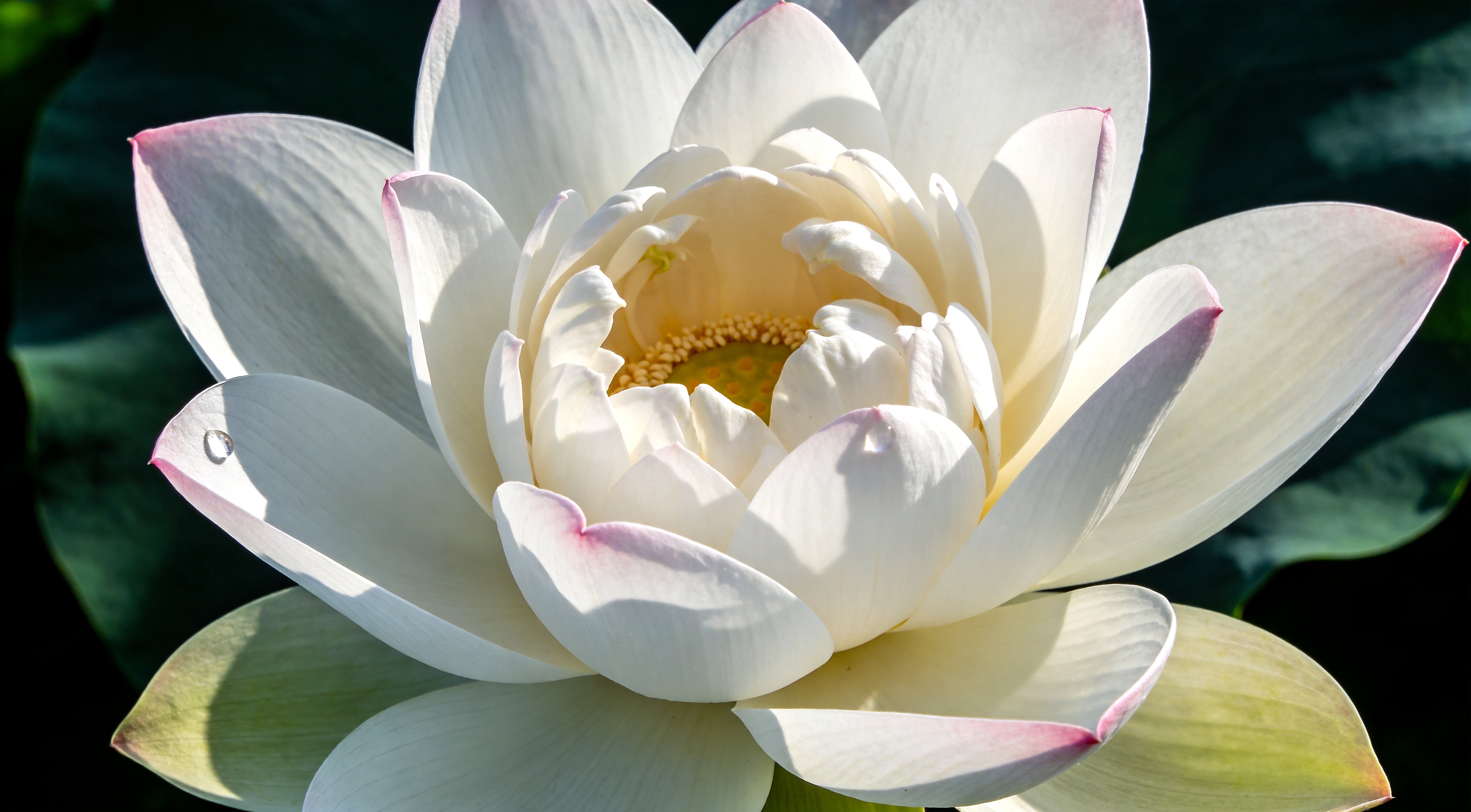
Different colors of lotus carry different significance in Buddhist art. The white lotus represents spiritual purity and the perfection of wisdom. The pink lotus is associated with the Buddha himself and the highest states of realization. The blue lotus symbolizes wisdom over knowledge — the kind of knowing that comes from direct experience rather than books. The red lotus speaks to the heart, to love and compassion, the qualities of the bodhisattva.
You will often see the lotus flower used as a throne or pedestal for seated Buddhas and bodhisattvas, including Kwan Yin. This is not decorative. It signals that the being depicted has risen above the mud of worldly attachment. They sit in full bloom. They have made the journey.
The Lotus in Hindu Traditions
Long before Buddhism, the lotus was sacred in the Indian subcontinent. In Hindu cosmology, a lotus emerges from the navel of Vishnu as he rests on the cosmic ocean, and from that lotus is born Brahma, the creator. The lotus flower is thus tied to the very origins of the universe — a symbol of creation, of life emerging from the formless deep.
Lakshmi, the goddess of abundance and beauty, is nearly always depicted standing or seated on a lotus. Her association with the flower speaks to a particular understanding of prosperity: true abundance is not mere accumulation. It is flowering. It is the full expression of one's nature, rooted in the real, reaching toward the divine.
Even in yoga, the seated meditation posture padmasana takes its name from the lotus. To sit in lotus posture is to embody the symbol — grounded at the base, spine rising, crown open. The body becomes the flower.
The Lotus in Chinese and East Asian Culture
In Chinese tradition, the lotus flower meaning carries additional layers. The lotus is a symbol of harmony, elegance, and refinement. But it is also a symbol of integrity — the capacity to remain clean in a corrupt environment, to stay true to one's nature regardless of surroundings. The great Song Dynasty philosopher Zhou Dunyi wrote a short essay in praise of the lotus that Chinese schoolchildren still memorize today. "I love only the lotus," he wrote, "for it rises from the mud yet remains unstained."
The lotus also carries deep family symbolism in Chinese culture. The word for lotus, he, sounds like the word for harmony and union. A single lotus stem bearing two blooms represents a harmonious marriage. A lotus with a seed pod symbolizes fertility and the wish for many children.
In Japan, the lotus flower carries many of the same Buddhist associations but takes on additional seasonal and aesthetic meaning. Lotus viewing in high summer is a quiet ritual — an opportunity to contemplate the brief, radiant blooming of a flower whose petals begin to fall almost as soon as they fully open. Mono no aware, the bittersweet awareness of impermanence, is written into the lotus just as it is written into the cherry blossom.
Living With the Lotus
You do not need to be Buddhist or Hindu to be moved by the lotus. The image of a flower rising unsoiled from the mud is, at its core, a human image. Everyone who has walked through difficulty and emerged with something intact recognizes it.
A single lotus flower in a bowl of water. A silk painting of lotus blossoms near a meditation space. A small carved lotus on a wooden box that holds something precious. These are not merely Eastern flower symbolism references — they are quiet reminders. Reminders that the mud is part of the path. That blooming is possible. That purity is not about staying clean, but about refusing to carry the dirt with you once you have passed through it.
The lotus does not forget where it came from. It simply does not let it define where it is going.
That is worth remembering.
No letters yet — be the first to write.