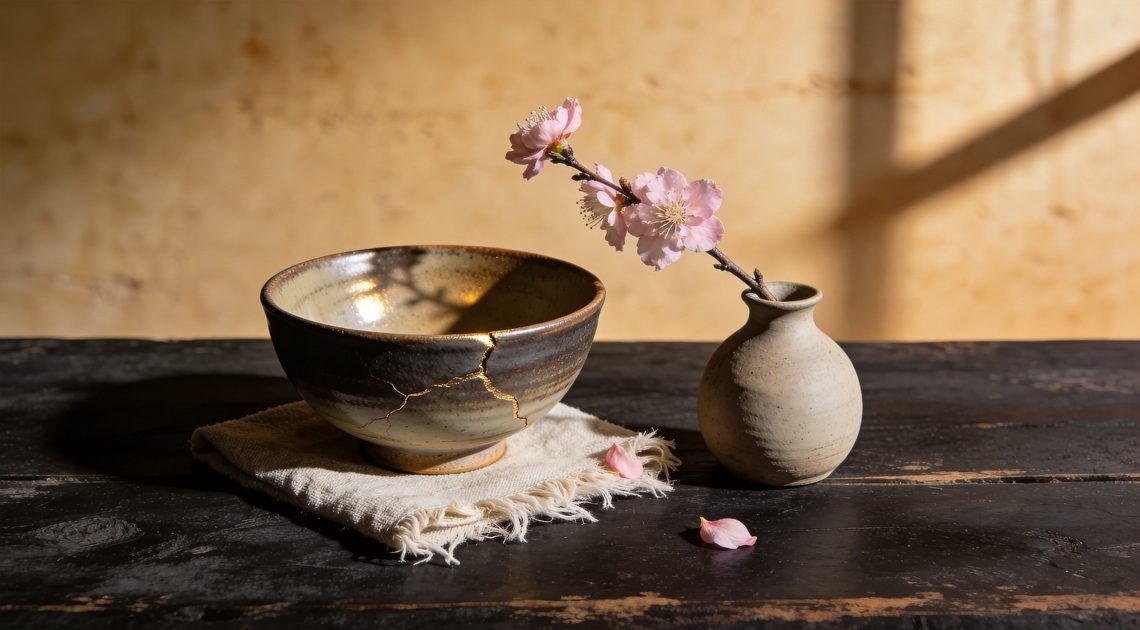
Some ideas travel across cultures and arrive intact. Others arrive flattened — reduced to a single English word, stripped of context, repackaged as lifestyle content. The Japanese life concepts that have gained popularity in recent years — ikigai, kintsugi, wabi-sabi, and others — have suffered from this flattening more than most. They appear on motivational posters. They sell self-help books. They are reduced to hashtags.
But these ideas are not décor for the mind. They are living traditions, shaped over centuries, rooted in specific ways of seeing and being. Understood deeply, they offer something far more valuable than a tidy formula for happiness. They offer a different relationship to daily life — one grounded in meaning, imperfection, repair, and attention.
Here are four Japanese concepts worth knowing, not as buzzwords but as quiet companions for the ordinary days.
Ikigai: A Reason to Rise
The word ikigai is often translated as "purpose" or "reason for being." In the West, it has become associated with a Venn diagram — four overlapping circles labeled what you love, what you are good at, what the world needs, and what you can be paid for. The intersection, the diagram suggests, is your ikigai.
There is some truth to this, but the diagram is a Western invention. In Japan, ikigai meaning is less analytical and more organic. It is not something you find through a career assessment. It is something you already have, often hidden in the small routines of daily life — the morning walk, the garden tended with care, the craft practiced quietly for decades.
Ikigai does not have to be grand. It does not have to be your job. It can be as simple as the reason you get out of bed in the morning — the cup of tea you look forward to, the work your hands know how to do, the person who depends on you. In the Japanese understanding, ikigai is found not by searching for it but by paying attention to what already gives your days shape and meaning.
This is the first lesson of Japanese life concepts: purpose is not a destination. It is a practice of noticing what makes you feel alive, and choosing it again and again.
Kintsugi: The Beauty of Repair
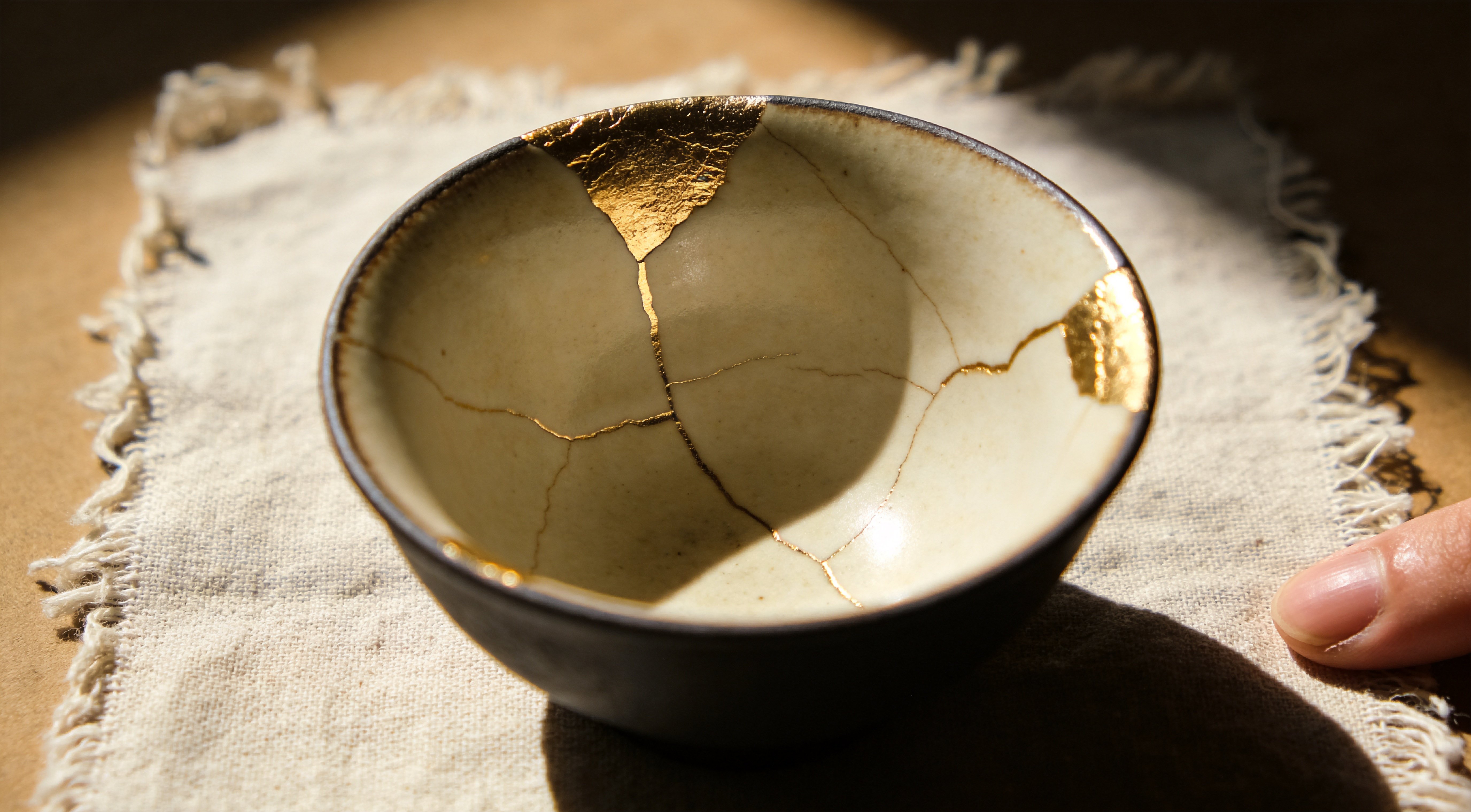
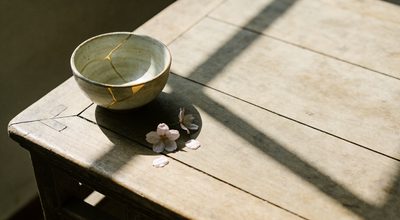
A bowl breaks. In most cultures, it is discarded — or, if repaired, the repair is hidden. The goal is to make the object look as if the break never happened. Kintsugi does the opposite.
In this centuries-old Japanese art, broken pottery is repaired with lacquer mixed with powdered gold, silver, or platinum. The cracks are not disguised. They are illuminated. The repaired bowl is more beautiful — and often more valuable — than the unbroken original. The break becomes part of the object's story, not a flaw to be erased.
Kintsugi philosophy is not really about pottery. It is about living. It says: you will break. Something will shatter — a relationship, a dream, a version of yourself you thought was permanent. The question is not whether you can hide the damage. The question is whether you can honor it. Whether you can let the repair become something luminous rather than something shameful.
In a culture obsessed with perfection and newness, kintsugi is a quiet rebellion. It insists that what has been broken and repaired is worthy of reverence — not despite its cracks, but because of them. This is not optimism. It is a deeper honesty about what it means to be human.
Wabi-Sabi: The Perfection of the Imperfect
If kintsugi is the art of repairing the broken, wabi-sabi is the art of seeing beauty in what was never perfect to begin with.
Wabi-sabi meaning is notoriously difficult to translate. It is not a single idea but a sensibility — an appreciation for the imperfect, the impermanent, and the incomplete. The worn wooden threshold. The crackled glaze on a tea bowl. The asymmetrical form of a handmade vase. The way autumn leaves look more beautiful as they begin to fall.
Western culture trains us to value symmetry, flawlessness, and finish. Wabi-sabi trains the opposite eye. It sees the crack not as damage but as history. It sees the uneven rim not as a mistake but as evidence of the hand. It sees the fading of color, the softening of edges, the quiet evidence of time passing — and calls it beautiful.
Living with wabi-sabi does not mean lowering your standards. It means expanding them. It means finding room for the imperfect in your home, your objects, and — slowly, gently — yourself. This is one of the most liberating Japanese life concepts: the recognition that you do not need to be flawless to be worthy of care.
Mono No Aware: The Pathos of Things
Every spring, cherry blossoms bloom across Japan. They are breathtaking. They also fall within a week. The Japanese do not mourn this brevity. They celebrate it. The beauty of the blossoms is inseparable from their impermanence. They are beautiful because they will fall, not in spite of it.
This is mono no aware — often translated as "the pathos of things" or "the bittersweet awareness of transience." It is not sadness. It is a gentle ache, a recognition that everything passes, and that this passing is what gives life its poignancy. The last light of evening. The sound of rain. The brief, radiant bloom of a flower that will never bloom again in exactly the same way.
To live with mono no aware is to stop resisting the passage of time. It is to recognize that loss and beauty are intertwined — that the ending is part of the story, not a failure of the story. In a culture that worships permanence and fears aging, this is a quietly revolutionary way of seeing.
Living With These Ideas
None of these Japanese concepts ask you to change your life dramatically. They ask you to change how you see the life you already have. Ikigai asks: what already gives you a reason to rise? Kintsugi asks: what have you repaired, and can you honor the repair? Wabi-sabi asks: where is there beauty in your imperfection? Mono no aware asks: can you love what is passing, precisely because it is passing?
These are not questions with final answers. They are companions for the journey. Small lights in the ordinary dark. Not a philosophy to master, but a way of paying attention — to your days, your objects, your cracks, and your joys.
That is the quiet gift of Japanese life concepts. They do not demand transformation. They invite attention. And attention, practiced over time, changes everything.
No letters yet — be the first to write.