There is a common misunderstanding about zen interior design. Scroll through enough minimalist home images, and you will find stark white rooms with a single floor cushion, a bare wall, and perhaps one spindly branch in a concrete vase. It looks serene. It also looks like no one actually lives there.
A true zen living room is not an exercise in absence. It is not about removing everything until the space feels hollow. It is about choosing with such care that everything that remains belongs there — including warmth, texture, and the quiet hum of a room that actually welcomes the people who enter it.
If you have ever wanted to create a calm, intentional living space but recoiled at the thought of it feeling cold or empty, this is for you.
Start With Less, But Not Nothing
The principle is simple, but it is often misunderstood: a calm room begins with restraint. That does not mean getting rid of everything you own. It means giving each object enough room to be seen.
In many Western homes, the instinct is to fill every surface. Books on the coffee table, throws draped over every arm, shelves crowded with small decorative items. A zen living room does the opposite. It leaves breathing room between objects — space for the eye to rest. A single ceramic bowl on a side table, rather than a cluster of five. One piece of meaningful art on a wall instead of a gallery grid.
The question is not "What can I add?" but "What can I let go of so that what remains feels significant?" The goal is not minimalism for its own sake. It is significance. When you walk into the room, the things you see should feel chosen, not accumulated.
Texture Is the Difference Between Calm and Cold
This is where so many attempts at calm interiors go wrong. They strip away color and pattern, but they also strip away texture. The result is a room that feels flat, sterile, and unwelcoming — the opposite of what Zen practice cultivates.
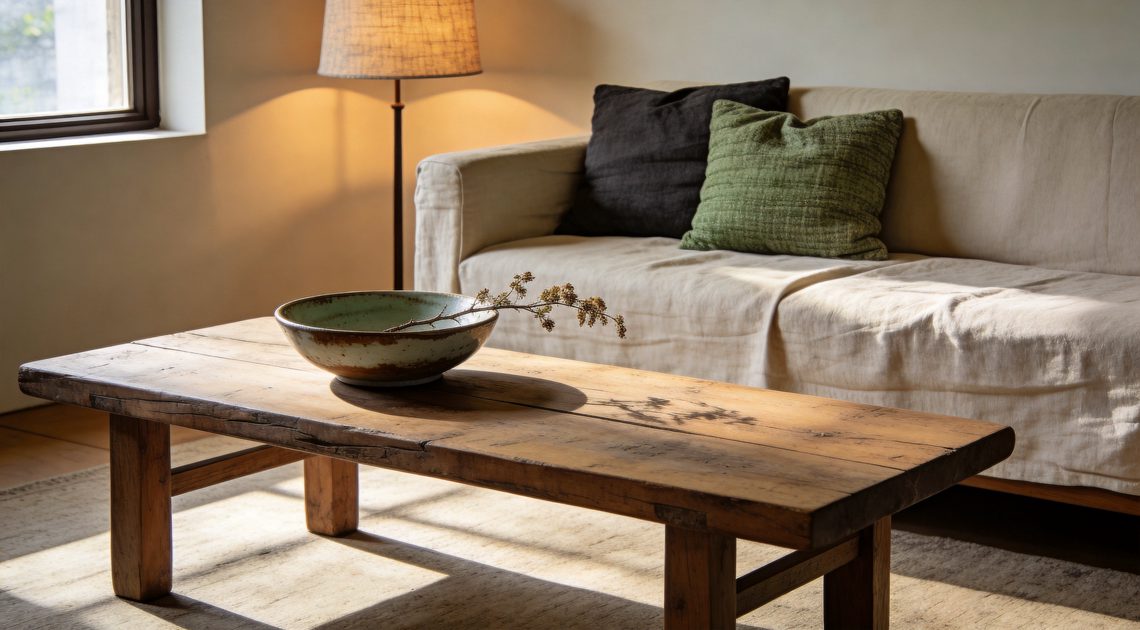
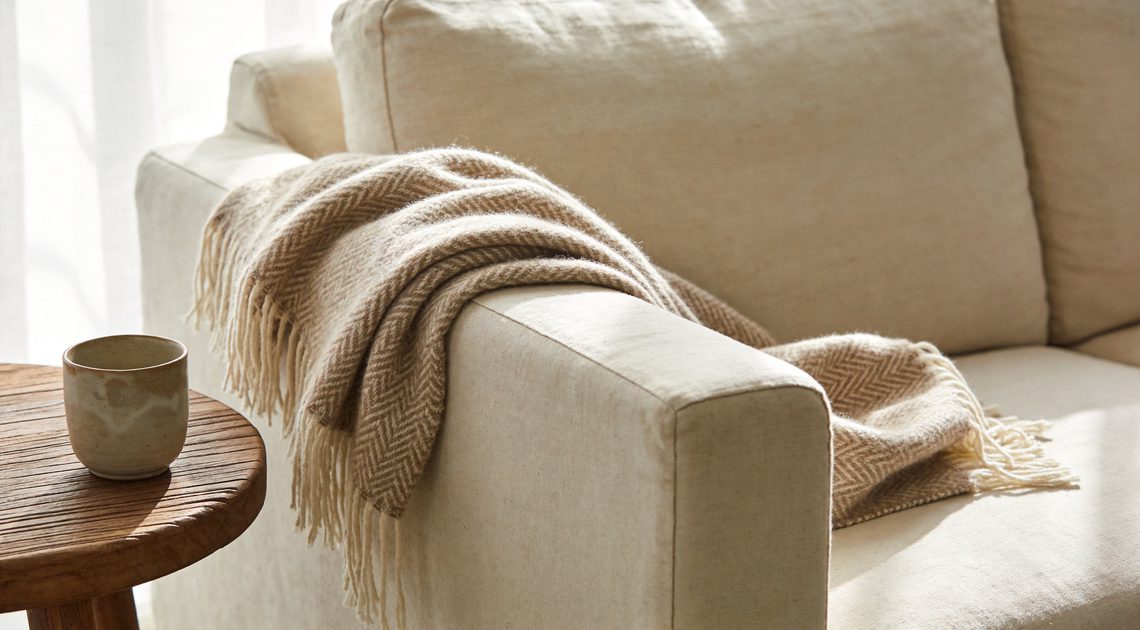
Texture is what makes a quiet room feel alive. Think of a handmade wool rug underfoot instead of a synthetic one. Linen curtains that soften the light rather than block it. A wooden coffee table with a visible grain, perhaps slightly weathered. A hand-thrown ceramic vase with an uneven glaze. These surfaces catch light differently throughout the day. They invite touch. They make stillness feel warm, not empty.
In mindful home decor, materials matter deeply. Natural fibers — wool, linen, cotton, jute, silk — carry a different energy than synthetics. They age gracefully. They breathe. A linen cushion will look better at year three than it did on day one. A poly-blend cushion will not. This is wabi-sabi in practice: choosing materials that grow more beautiful as they show their age.
Light Shapes Atmosphere More Than Objects Do
You can arrange the perfect room, but if the lighting is harsh and overhead, nothing will feel calm. A zen living room is lit in layers, like a room designed to be lived in at different hours of the day.
Natural light is the foundation. Avoid heavy, light-blocking window treatments. Let the daylight shift across the room — this changing light is part of the room's aliveness, a quiet reminder of impermanence. As evening comes, bring in warm, low-level sources: a floor lamp with a fabric shade, a single candle on a side table, the soft glow of a rice paper lantern. Never a bare bulb. Never a cold white LED overhead as the only source.
The goal is a room that feels as welcoming at dusk as it does at noon. Shadows are not a problem to solve. They are part of the atmosphere.
Choose Objects That Carry Meaning
A room without personal objects is not calm. It is anonymous. The difference between a hotel lobby and a home is the presence of things that tell a story.
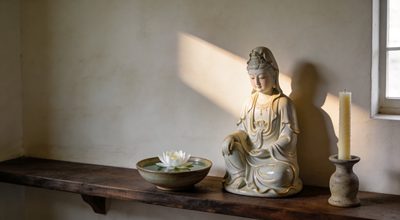
In a zen living room, objects are few, but each one holds weight. A Kwan Yin statue on a low shelf, not as decoration but as a quiet presence. A ceramic cup from a trip to Kyoto, used daily rather than hidden in a cabinet. A single branch in a stoneware vase, placed intentionally rather than as an afterthought.
These objects are not chosen to impress. They are chosen because they mean something. A visitor might not notice them at all. But you do. And over time, the room accumulates a kind of quiet energy — not from the number of things, but from the depth of what is there.
The Imperfect Corner: Leave Room for Life
Here is a truth that glossy magazines will not tell you: a room that is perfectly styled is not a room that is lived in. Zen interior design makes space for imperfection. The throw blanket that is slightly rumpled, not folded into a crisp angle. The book left open on the arm of the sofa. The small, unremarkable stone your child brought home from the beach, now sitting on the windowsill next to a handmade vase.
These are not mess. They are evidence of presence. A zen living room should feel inhabited — not abandoned, not museum-like, not staged for a photographer. The Japanese concept of wabi-sabi teaches that beauty lives in imperfection and impermanence. A room that is too perfect closes itself off. A room that allows life to happen stays open.
A Simple Practice
If you are standing in your living room right now, wondering where to start, try this: remove three things. Not everything. Just three. Then stand back and notice how the room breathes differently. Next, find the softest source of light in the room and turn off everything else. Sit in that light for a moment. Feel the difference between dim and dark, between quiet and empty.
A true zen living room does not feel barren. It feels like a held breath about to release. It is warm. It is textured. It is personal. And it is waiting for you to arrive, just as you are.

No letters yet — be the first to write.